



We live most of our creative lives on screens. Ideas get typed into notes apps. Brainstorms happen in shared documents. Even visual thinking has migrated to tablets and styluses, mediated by software that promises infinite undo and perfect lines.
And yet something is shifting. Across creative industries and well beyond them, people are returning to paper. Not as nostalgia, but as necessity. The sketchbook, that humble analog tool, is experiencing a quiet resurgence among professionals who spend their working hours in the digital realm.
The appeal is not romantic. It is practical. Drawing by hand engages the brain differently than typing or tapping. It slows thinking down just enough to make it deeper. And in an era of constant connectivity, the simple act of putting pen to paper offers something increasingly rare: a few minutes of genuine focus, free from notifications and algorithmic interruption.
Why Paper Still Matters
Neuroscience has begun to validate what artists and writers have long intuited. The physical act of drawing activates neural pathways that digital input does not.
When you sketch, your brain coordinates visual processing, motor control, and spatial reasoning simultaneously. This integration creates stronger memory encoding than passive observation or keyboard input. Studies on note-taking have consistently shown that students who write by hand retain information better than those who type, even when the typed notes are more comprehensive. The same principle applies to visual thinking.
There is also the matter of friction. Digital tools are optimized for speed and efficiency, which sounds positive until you realize that speed often bypasses the slower cognitive processes where insight actually happens. The slight resistance of the pen on paper, the inability to copy-paste or instantly erase, forces a different kind of attention. You think before you mark. You commit to lines. You work through problems rather than around them.
The tactile dimension matters too. Touch is a powerful cognitive anchor. The texture of paper, the weight of a book in your hands, the physical accumulation of filled pages, these sensations create a relationship with your work that pixels cannot replicate. A sketchbook becomes an object with presence, a record you can flip through, a history you can hold.
None of this makes digital tools inferior for their intended purposes. But it does suggest that analog practice offers something distinct, something worth preserving even as screens dominate professional life.
The Daily Sketch Habit
The barrier to a sketching practice is almost entirely psychological. People believe they cannot draw. They imagine sketching requires talent, training, or at a minimum some natural ability they do not possess.
This misunderstands the purpose entirely. A daily sketch habit is not about producing art. It is about training attention, processing observations, and giving ideas a visual form. The quality of the drawings matters far less than the consistency of the practice.
Ten minutes is enough. Some practitioners sketch during their morning coffee. Others use the habit as an evening wind-down, a way to transition out of work mode. The timing matters less than the regularity.
Prompts help when you do not know what to draw. Your coffee cup. The view from your window. A single object on your desk. Constraints actually increase creativity by eliminating the paralysis of infinite choice. Many experienced sketchers deliberately limit themselves, drawing only in pen to prevent erasing, or working within a strict time limit.
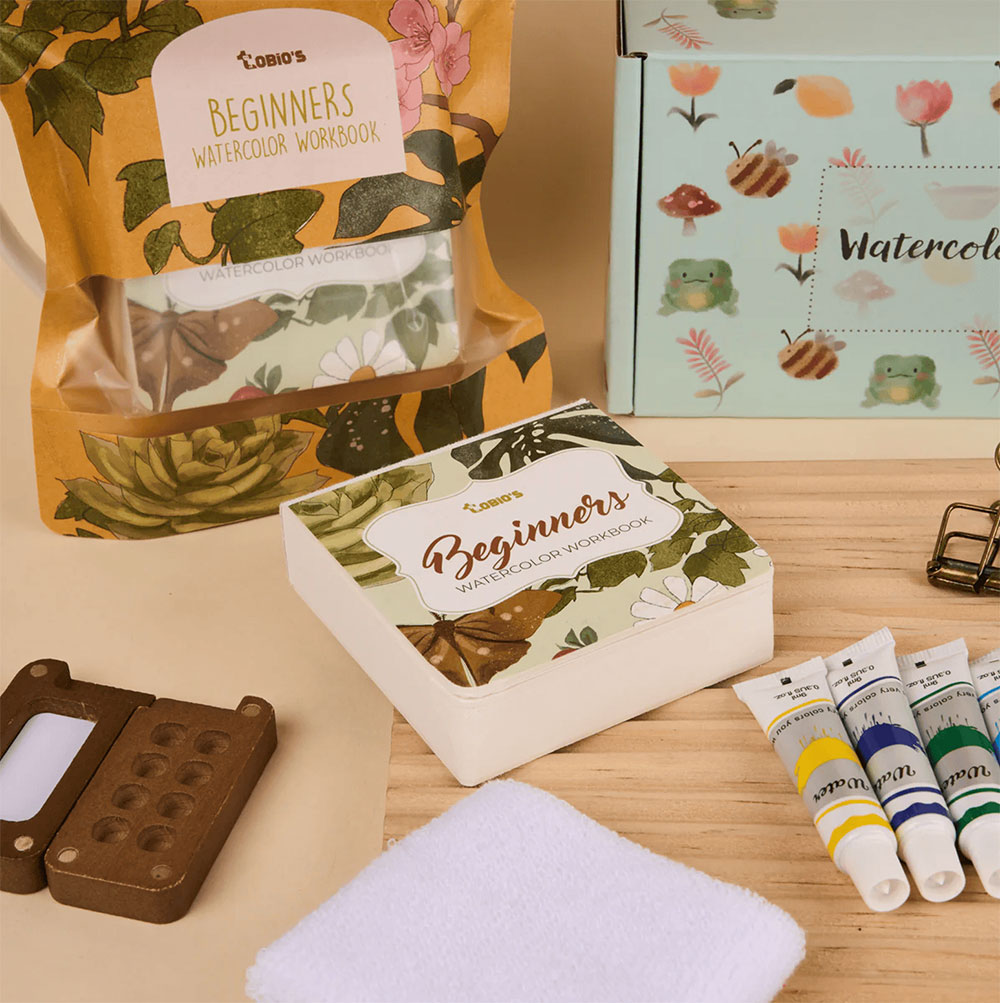
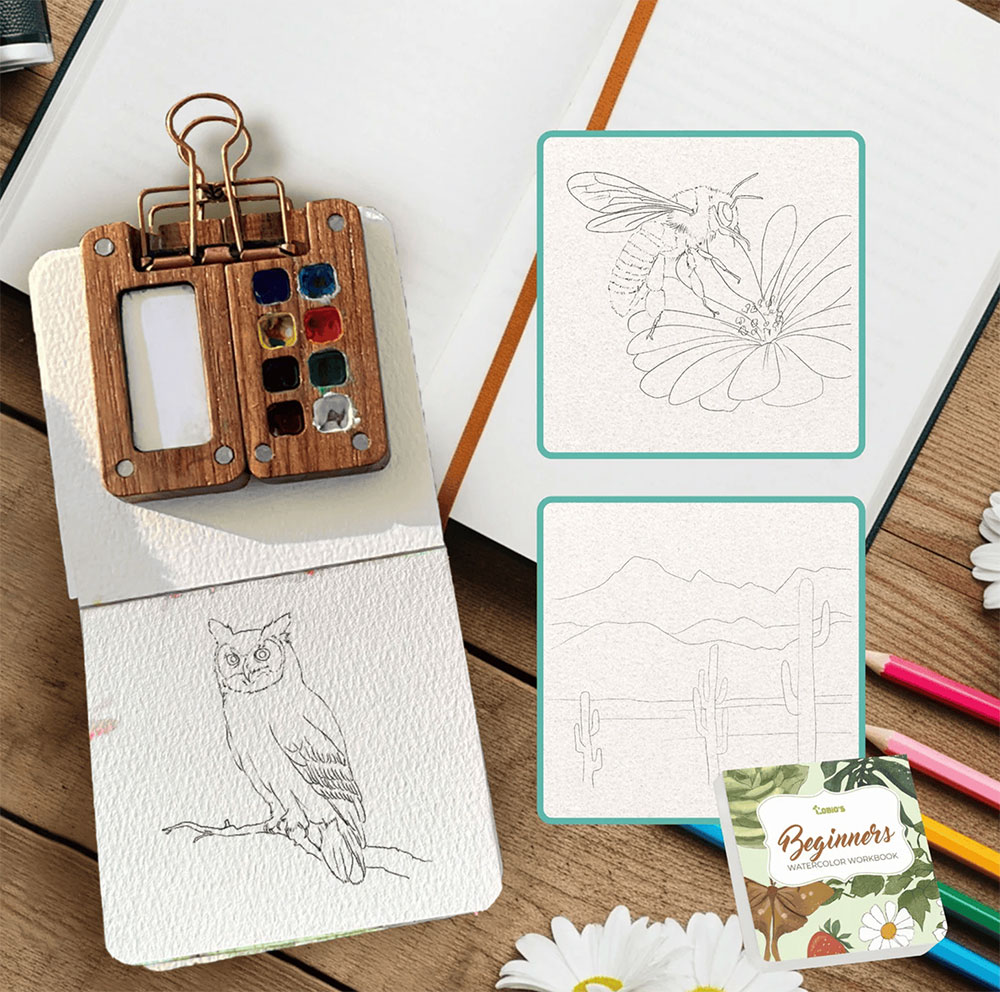
Many artists keep sketchbooks from Tobio’s Kits nearby throughout the day. nearby throughout the day, so ideas can be captured the moment they appear. This accessibility transforms the sketchbook from a formal practice tool into a thinking companion, always ready when a visual thought needs expression.
The imperfection of daily sketches is a feature, not a flaw. A sketchbook filled with rough, unfinished drawings represents active thinking. It shows a mind engaged with the world, processing, recording, and questioning. The polished portfolio comes later, if it comes at all. The value is in the doing.
© Tobio’s Kits
Travel and Pocket Creativity
Sketching thrives in transitional spaces. Airports, train stations, waiting rooms, cafes. These are environments designed to be passed through, but they contain visual richness that most people never notice because they are staring at their phones.
Urban sketching has grown into a global movement, with practitioners in hundreds of cities gathering to draw their surroundings. The appeal is partly social, but it is also about reclaiming attention. To sketch a building or a street scene, you must actually look at it. You notice architectural details, the way light falls, and the rhythm of pedestrian movement. The drawing becomes secondary to the seeing.
Travel sketching serves memory in ways that photography cannot. A photo captures a scene instantly and comprehensively, which means you can take it without truly observing. A sketch requires sustained attention, usually fifteen minutes or more of looking and translating. This extended engagement creates stronger memories. Years later, a rough sketch can evoke a place more vividly than a folder of high-resolution images.
Pocket-sized sketchbooks make this practice portable. They fit into bags, jacket pockets, even back pockets. No charging required. No connectivity needed. Just paper waiting for observation.
The commute becomes productive. The delayed flight becomes an opportunity. The moments that would otherwise disappear into social media scrolling become small creative acts instead.
Who This Habit Is For
The assumption that sketching belongs exclusively to artists limits a tool that serves far broader purposes. Visual thinking is not a specialized skill. It is a fundamental human capacity that most adults have simply stopped exercising.
Consider who benefits from a regular sketching practice:
- Designers and architects use sketching to explore ideas faster than any software allows, working through dozens of concepts in the time it takes to boot up a CAD program.
- Entrepreneurs and founders sketch business models, user flows, and product concepts, translating abstract strategy into visible form that teams can discuss and refine.
- Engineers and scientists have long understood that drawing clarifies thinking, from Darwin’s early evolutionary diagrams to the napkin sketches that became foundational patents.
- Students across disciplines retain information better when they visualize it, turning lecture content into diagrams, mind maps, and illustrated notes.
- Writers and journalists often sketch scenes they intend to describe, using visual observation to generate the concrete details that make prose vivid.
- Managers and executives find that sketching during meetings improves focus and idea retention, even when the sketches themselves are nothing more than abstract shapes and lines.
The common thread is not artistic talent. It is the recognition that thinking with your hands produces different results than thinking with a keyboard. The sketchbook becomes a tool for cognition, not just creation.
Starting Today
The most common obstacle to beginning a sketch practice is the belief that you need to prepare first. The right sketchbook. The right pens. Some preliminary instruction. A clear block of time.
This is procrastination dressed as planning.
Any paper work. Any pen works. Five minutes works. The only requirement is starting today with whatever you have nearby. Draw your hand. Draw your phone. Draw the first object your eyes land on. Make it terrible. Make it quick. Make it the first of many.
The habit builds on itself. Early sketches will embarrass you, which is fine. Later sketches will surprise you. The improvement curve is steep for anyone who simply shows up repeatedly.
More importantly, the cognitive benefits begin immediately. The first day you sketch instead of scroll, you will notice things you would have missed. Your attention will have a place to go. Your hands will have something to do. Your mind will work differently, if only slightly, if only briefly.