
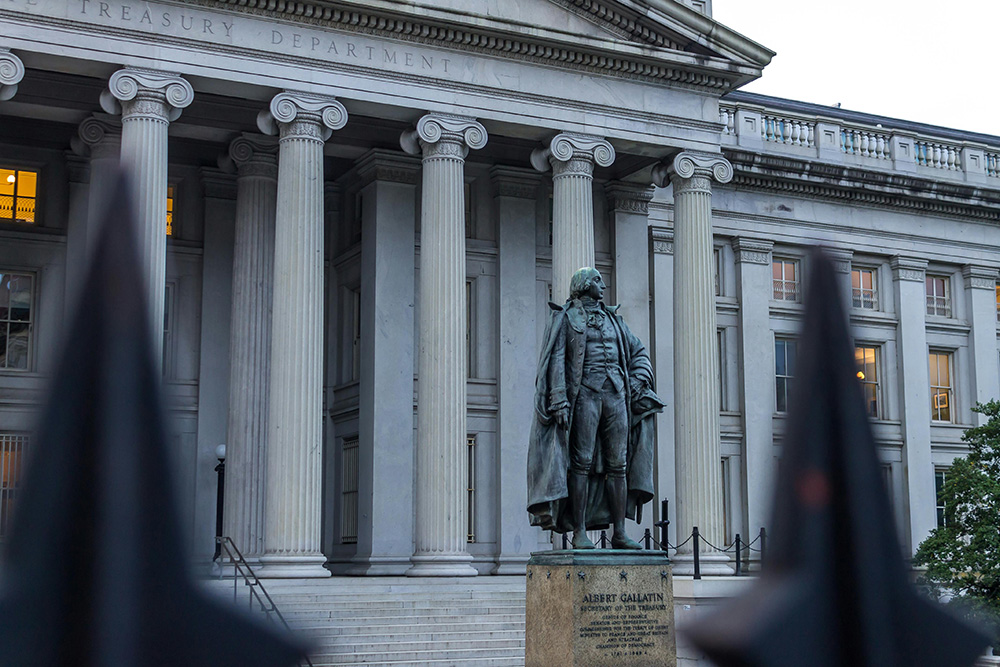

The U.S. Department of the Treasury announced new sanctions on Wednesday targeting oil traders and vessels accused of helping Venezuela evade U.S. restrictions and generate revenue for the government of Nicolás Maduro.
According to the Treasury’s Office of Foreign Assets Control, four companies operating in Venezuela’s oil sector have been sanctioned, and four oil tankers have been identified as blocked property. Officials said the vessels form part of a so-called shadow fleet that continues to transport Venezuelan crude in violation of U.S. sanctions.
Treasury officials stated that proceeds from these oil shipments provide financial support to Maduro’s government, which the United States does not recognize as legitimate. The administration argues that such revenue enables destabilizing activities and allows the regime to bypass international pressure.
“President Trump has been clear that the United States will not allow the Maduro regime to profit from oil exports while fueling criminal networks,” Treasury Secretary Scott Bessent said in a statement. He added that the department will continue enforcing sanctions as part of Washington’s broader pressure campaign on Caracas.
Background on Venezuela Oil Sanctions
U.S. sanctions on Venezuela’s energy sector date back to January 2019, when Petróleos de Venezuela S.A. was designated under Executive Order 13850 for operating in the country’s oil industry. Additional measures in August 2019 expanded the scope of restrictions, effectively blocking PDVSA’s assets under U.S. jurisdiction.
The Treasury said the latest designations complement recent enforcement actions taken earlier this month against PDVSA-linked officials, intermediaries, and vessels involved in transporting Venezuelan oil.
Companies and Vessels Designated
- OFAC identified several tankers that have allegedly carried Venezuelan crude:
- NORD STAR, linked to Corniola Limited and Krape Myrtle Co. LTD
- ROSALIND, also known as LUNAR TIDE, linked to Winky International Limited
- DELLA and VALIANT, linked to Aries Global Investment LTD
All associated companies were designated for operating in Venezuela’s oil sector, while the vessels were listed as blocked property due to ownership interests held by sanctioned entities.
Legal and Financial Implications
As a result of the designations, all property and interests belonging to the sanctioned entities that fall under U.S. jurisdiction are frozen and must be reported to OFAC. Transactions involving these parties are broadly prohibited for U.S. persons unless authorized by a specific or general license.
The Treasury emphasized that sanctions violations can result in significant civil or criminal penalties, including for non-U.S. individuals or institutions that facilitate prohibited transactions. Officials noted that OFAC enforces sanctions on a strict liability basis, meaning intent is not required for penalties to apply.
Treasury officials reiterated that sanctions are intended to change behavior rather than serve as punishment, stressing that compliance and disengagement from prohibited activity remain the pathway to removal from the sanctions list.
The latest action signals continued U.S. scrutiny of global shipping networks involved in Venezuelan oil exports and underscores the legal risks facing traders, ship operators, and financial intermediaries connected to the country’s shadow oil trade.