


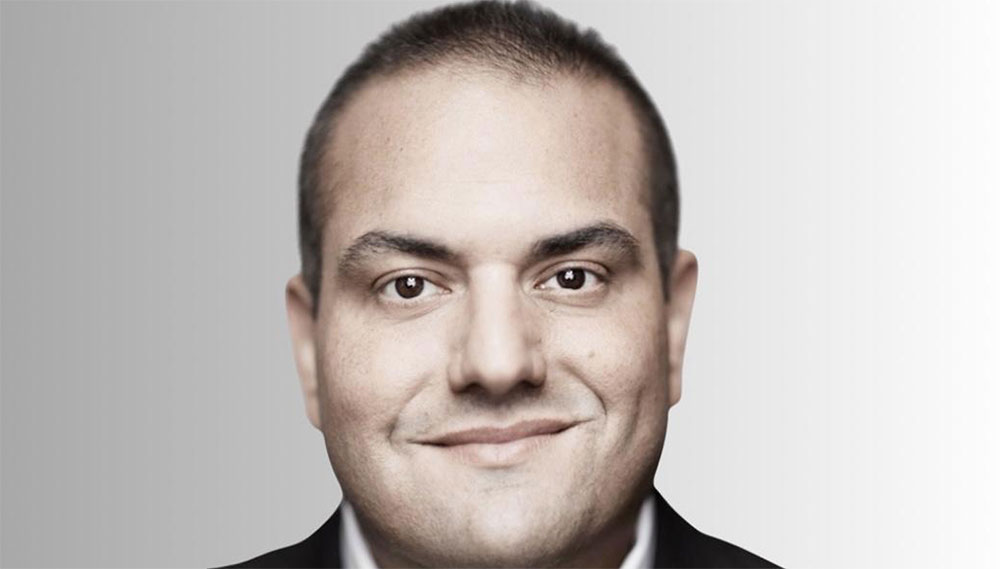

In 2004, Alexander Eastman, a surgical resident at Parkland Memorial Hospital, brought an unusual idea to the Dallas Police Department. At first, it sounded unsafe. It sounded impractical. To some, it sounded like something that simply would not work.
Eastman had spent countless hours in Parkland’s trauma bays, watching patients arrive already on the edge. Many of them were not suffering from injuries that should have killed them. What failed them was time. Bleeding that continued too long. Airways that collapsed before help could reach them. By the time these patients arrived in the operating room, the window to save them had often already closed.
Those experiences stayed with him. Slowly, a pattern became impossible to ignore. The most important moments in trauma care did not happen under bright surgical lights. They happened earlier, on sidewalks, in parking lots, and in hallways outside secured scenes. Whether a surgeon ever touched the patient in the operating room sometimes mattered less than what happened in those first few minutes.
Eastman’s conclusion was simple, even if the solution was not. If surgeons needed to treat patients faster, then they needed to get to patients faster. That meant not waiting in ambulances and not standing behind police lines. It meant going to the scene itself, alongside SWAT teams already operating in dangerous situations.
The idea cut against long-held beliefs on both sides. Doctors were not supposed to be part of police operations. Police departments were not designed to pause for medical care while danger remained. Those boundaries had been in place for decades, reinforced by training, culture, and caution.
Still, Dallas listened.
A Parkland Problem With No Easy Solution
Since the 1950s, Parkland Memorial Hospital has been recognized as one of the busiest trauma centers in the United States. Its surgeons provide world-class care to the city as it exists, not as it hopes to be. Dallas is a city where violence is an everyday reality. At all hours, patients arrive with gunshot wounds, stab injuries, severe vehicle crash trauma, and other high-velocity injuries.
Once patients reach the hospital, Parkland delivers exceptional care. What troubled Eastman, however, was what happened before patients arrived.
Trauma medicine uses a concept called Time to Definitive Care to describe the critical window between injury and life-saving treatment. In cities such as Dallas, that time is often extended by the structure of emergency response. Law enforcement must first secure the scene. Emergency medical crews wait for clearance. Surgeons prepare at the hospital, sometimes minutes away. Each step adds time, even when injuries require immediate attention.
This system is effective at maintaining order and safety. It is far less effective at stopping life-threatening bleeding.
Eastman began asking questions that many found uncomfortable.
- Why were tourniquets not applied earlier?
- Why were airway decisions delayed until patients were in transit?
- Why was medical care treated as something that could only begin after danger had fully passed?
He carried those questions beyond the walls of Parkland and into conversations with the Dallas Police Department.
Through the Academy
When Eastman proposed attending the police academy in 2004, he did not ask officers to change how they worked. Instead, he offered to change himself.
He committed to attending the police academy. He trained as a police officer. He learned command structures, radio communication, and tactical procedures. He accepted the same risks and followed the same rules as the officers he hoped to support.
Ultimately, he followed through on that commitment.
Eastman was commissioned as a reserve lieutenant by the City of Dallas and appointed to the SWAT team as a full member, receiving orders and wearing the same tactical gear as other members. During training and actual missions, Eastman worked alongside the other officers as part of the tactical team. In addition, when officers were injured during operations, Eastman used his medical skills and knowledge to make immediate medical judgments at the site of injury, rather than waiting for them to be transported to a hospital. This new model of care delivery (i.e., in active, potentially dangerous environments) shifted medical decision-making from a traditional model in which medical judgments are made after a scene is deemed secure and a patient reaches an emergency room.
Generally, medical training occurs in environments with standardized lighting, tools, and staffing. In contrast, police operations occur in an unpredictable environment with little or no control over it (hallways, stairwells, etc.). There is always a level of risk, and it may be based on very limited information. Dr. Eastman quickly realized that while surgery requires precision, it also provides the doctor with a high degree of predictability. A hallway outside a barricaded door does not allow for predictability. There was no time to prepare for what could occur when deciding how to react, and there was little to no backup support from other professionals as would normally be available.
This shift redefined not only when medical care began, but where and under what conditions it could occur.
Testing the Model
The concept remained controversial until it faced a real-world test.
In 2007, during a federal warrant service in North Oak Cliff, officers encountered resistance that escalated into violence. A suspect was shot during the confrontation. In earlier years, medical treatment would have waited until the scene was fully secured.
This time, it did not.
Eastman was already present. Bleeding control began immediately. Airway decisions were made without delay. The individual was stabilized more quickly than the system had previously allowed.
There was no press conference afterward and no celebration. Within Dallas law enforcement and trauma communities, however, the outcome was clear. The model worked.
It was not dramatic. It was efficient. In trauma medicine, efficiency saves lives.
Blurring the Lines Raises More Questions
Embedding surgeons within police units was not universally accepted. Critics raised valid ethical concerns. Physicians operate under professional standards that do not always align with law enforcement missions. Placing medical professionals inside tactical teams raised questions about neutrality, role identity, and professional boundaries.
Supporters pointed to measurable outcomes. Preventable deaths declined. Interventions occurred sooner. Triage decisions improved.
Eastman rarely addressed the debate publicly. He continued working.
Over time, Dallas SWAT developed formal tactical medicine protocols. Tourniquets became standard equipment. Officers received hemorrhage control training. Medical decisions moved closer to the moment of injury.
What began as frustration became institutional policy.
From Dallas to the National Arena
Dallas was just one example of a large number of cities facing the issue of mass casualties; following the Sandy Hook shooting, there was nationwide interest in whether or not local emergency response systems would perform well in times of extreme stress. Eastman was also part of the Hartford Consensus, which was an effort to define the working relationship between law enforcement and medical response.
In addition to the conclusions of the Hartford Consensus regarding emergency response systems, similar to what was found in Dallas, it was determined that waiting for an incident to be fully resolved results in loss of life.
From this work came the THREAT (Tactical Health Response and Emergency Action Team) framework and the Stop The Bleeding initiative. Tourniquets are becoming increasingly common in many public places; civilians are receiving training in controlling bleeding; police departments across the U.S. are implementing procedures used by the Dallas Police Department in their own communities.
The city became a model for best practice.
Dallas’ Darkest Hour
Dallas was subjected to one of the most violent episodes of recent U.S. history on July 7, 2016. The day started out peacefully enough. A group of protesters had gathered to demonstrate their outrage toward the excessive use of force by law enforcement officers.
However, the peaceful atmosphere changed quickly when a lone gunman took shots at law enforcement officers, killing 5 and injuring numerous other officers. The shooting continued for many hours. During this time, the city was required to face violence in a manner they had never experienced before, not just as a threat to public safety, but also as a disruption to community confidence.
July 8, 2016, was the first time in Dallas’ recent history that the city’s citizens would be able to witness the effects of violence firsthand. In the past, violence in Dallas had been something that was always present; however, the violence of that evening seemed different. Police were shot by another person (a protester) who was attempting to bring attention to the need for reform. Streets that people knew well were now crime scenes. News of what was happening spread rapidly throughout neighborhoods, police stations, emergency rooms, and government offices.
Eastman was one of those individuals who witnessed the events of that evening from two sides of the response.
Initially, Eastman served as a police officer to navigate a fluid, uncertain, and rapidly changing tactical environment with limited information. At some point after this, he then transitioned into his role as a trauma surgeon at Parkland Memorial Hospital to treat the officers who had been injured in the gunfire.
The physical location of the hospital and the emotional state of the arriving officers created a situation where the surgeon and the victims were not separated as they typically would be in a clinical setting. The trauma to the city was very individual, identifiable, and up close.
To Eastman, the events of that evening represented more than 10 years of developing the systems and integrating medical decision-making into the law enforcement response. The systems that Eastman had developed and the integration of medical decision-making into the law enforcement response were being tested under the most extreme circumstances possible.
For the city, the events of that evening forced a confrontation of issues related to public safety, preparedness, and how violence changes civic life. For the second time in a few months, Parkland Memorial Hospital became a symbol of the resilience of the residents of Dallas as they cared for the wounded while searching for ways to regain stability.
The connection between the policing and medical systems that Eastman had developed over the years, without much fanfare, came to the forefront and was clearly visible during this episode of violence.
Legacy of Dallas
Today, tactical medicine no longer seems unusual. Police academies teach it. Federal funding supports it. National readiness planning includes it.
That transformation began in North Texas, in Parkland’s trauma bays and on Dallas streets.
Alexander Eastman continues to serve as a reserve lieutenant with the Dallas Police Department and is identified as the department’s chief medical officer under the current administration. Although his career has expanded into federal roles, where scrutiny is greater and challenges are broader, the foundation remains local.
Dallas did more than host the experiment. The city tested it, refined it, and lived with its consequences.
What began as a temporary solution created a lasting change in how cities think about life, death, and the minutes that separate them.
For Dallas, this story is now part of the city’s history.