

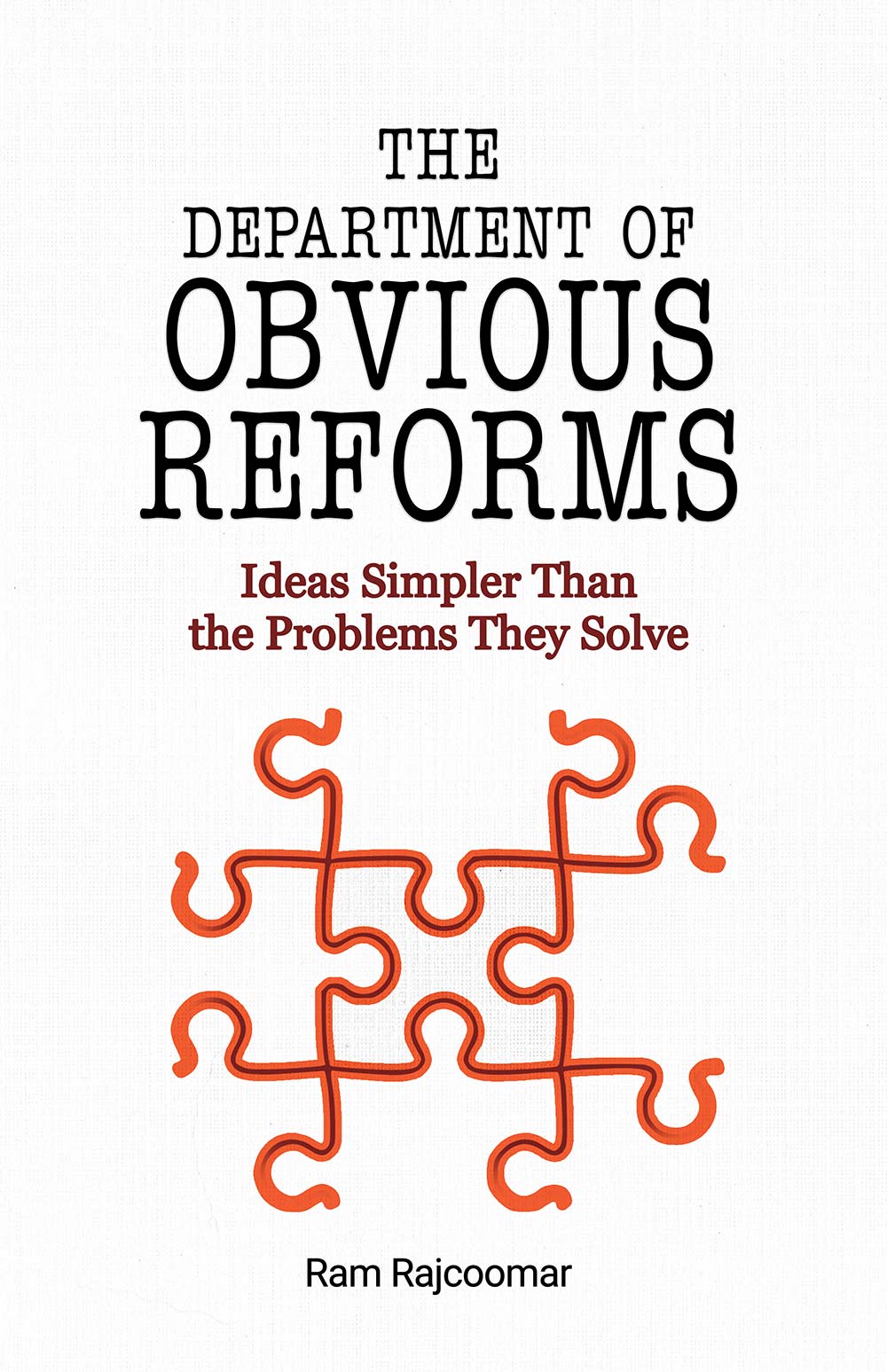

In an era dominated by dense policy reports and polarized debates, a slim new book cuts through the noise with refreshing clarity. Titled The Department of Obvious Reforms and written by Ram Rajcoomar, it tackles everyday societal frustrations the way Malcolm Gladwell dissected success in Outliers: by pairing things everyone already feels with insights most people have never considered, then pointing toward solutions that feel both bold and strangely achievable.
The book currently sits at number one in Amazon’s Kindle Store across multiple categories, including Public Policy. That rapid climb says something. Readers are hungry for ideas that are easy to understand yet promise real improvement. At its heart lies a simple reversal. Societies spend enormous energy catching and punishing bad behavior while barely noticing the millions who show up every day and keep civilization running. What if we flipped the incentives? What if doing the right thing becomes visibly easier and more rewarding than doing the wrong thing? Over nine concise chapters, the book explores how small, interconnected shifts in rewards and penalties could ease multiple problems at once, often without massive new spending or bureaucratic empires.
- Take traffic. Most of us accept gridlock as an unavoidable fact of modern life. Hours lost, fuel burned, tempers frayed, accidents waiting to happen. The book sketches incentives that would nudge people toward safer cars, smarter routes, and less congested hours. The payoff would not be modest: fewer crashes, cleaner air, and billions of hours returned to productive life. Suddenly, the daily commute feels less like a sentence and more like a problem someone forgot to solve.
- Grocery prices tell a similar story. Shoppers watch costs climb while farmers earn pennies on each sale. Hidden markups, opaque middlemen, and misaligned subsidies keep the system expensive and wasteful. The book imagines a world where transparency rules and competitive pressure make healthy food cheaper, where producers and consumers both come out ahead. It sounds utopian until you realize the pieces already exist. They simply need to be rearranged.
- Even something as ordinary as table salt comes under gentle scrutiny. Beyond the familiar warnings about blood pressure lie quieter dangers: contaminants that accumulate over decades and contribute to cognitive decline, behavioral issues, and chronic disease. Cleaner harvesting and basic testing would cost governments almost nothing yet protect entire generations. The chapter leaves you staring at the shaker on your table with new suspicion and new hope.
- Blood donation, usually framed as pure altruism, gets reframed as one of the smartest health habits available. Regular donors may quietly lower their own risks of certain cancers and heart disease while keeping hospital supplies steady. Small rewards could turn a sporadic act of kindness into a widespread routine, creating a virtuous cycle of better public health and lower medical costs.
- Homeownership, that cornerstone of the middle-class dream, carries hidden burdens that grow heavier during downturns. Endless property taxes can feel like permanent rent to the government, discouraging improvements and penalizing prudence. The book floats the idea of linking tax bills to genuine contributions: energy upgrades, or simple upkeep, could earn meaningful rebates. Owners become active partners in national resilience instead of passive taxpayers.
- Health care systems groan under unlimited demand, shrinking workforces, and an aging population. Long wait times affect everyone, yet many visits are preventable, and many chronic conditions are lifestyle-driven. A modest co-pay for non-emergency care paired with bonuses for staying healthy could shorten queues, preserve universal access for the truly vulnerable, and shift medicine from reactive to preventive. The waiting room of the future might actually have empty chairs.
- Tax avoidance by the ultra-wealthy widens inequality while starving public budgets. By borrowing against ever-appreciating assets rather than selling them, billionaires enjoy luxurious lifestyles without ever realizing taxable income. The book proposes a reform that would close this loophole while safeguarding legitimate investment incentives. The outcome would be a more equitable sharing of the tax burden and billions of additional dollars flowing to schools, roads, hospitals, and other public goods, achieved without penalizing genuine wealth creation.
- Executive pay has ballooned to levels that erode trust and distort corporate priorities, with many CEOs now earning hundreds of times more than their typical employee. The book suggests tying compensation caps to internal pay ratios and long-term performance, while granting tax advantages to companies that comply. This simple mechanism would realign leaders with workers, discourage short-term gimmicks, and restore fairness without stifling ambition or innovation. Suddenly, building a healthy company becomes the fastest path to both personal wealth and lower taxes.
- Finally, democratic governance itself suffers when politicians can promise anything and deliver nothing. The book argues that simple mechanisms like citizen-triggered recalls, stricter eligibility rules for candidates, and fully transparent digital voting records could swiftly return real power to voters. These tools would make broken promises politically fatal and force accountability between elections rather than every four years. Suddenly, representatives would need to govern as if the public were always watching, because it finally would be.
What makes the book electric is not the individual ideas. It is the way they connect, the way fixing one thing often fixes three others, the sense that progress might be hiding in plain sight, waiting for someone to notice. In a time of exhaustion with politics as usual, The Department of Obvious Reforms reads like a quiet revolution. It does not shout. It does not scold. It simply asks: what if the answers were already here, disguised as common sense?
The book is available now on Amazon. At its current pace, it may not stay in the top spot forever, but the conversation it has started feels built to last.