



The idea of Runway has long been shaped by fiction. A particular kind of fiction — polished, cynical, and mostly authored by outsiders looking in. One film in particular, immortalized by a pair of stilettos and a scathing one-liner about cerulean, turned “Runway Magazine” into a shorthand for dusty glamour and cruelty. The name became part of cinematic lore — and, for many, confused with reality.
But Runway Wish, the animated short film produced by RUNWAY MAGAZINE, reclaims their name — not with rebuttal, but with narrative clarity.
It doesn’t argue. It doesn’t attempt to correct the fictional record with facts or timelines. Instead, it tells a story — one where the magazine speaks for itself.
What Happens When a Magazine Becomes a Place?
Runway Wish is not an animation in the conventional sense. It avoids the tropes of fashion marketing — no zoom-ins on garments, no product placements, no artificial declarations of “the future.” What it offers instead is a visual essay in movement and identity. It asks: What does a magazine become when it’s no longer bound to paper?
In the world of Runway Wish, a magazine cover does not merely open — it reveals. A page is not static — it’s a portal. We are led through cafés, rooftops, train stations, and snow-covered airports, not by plot, but by presence. That presence is Runway Magazine itself — interpreted visually, emotionally, architecturally.
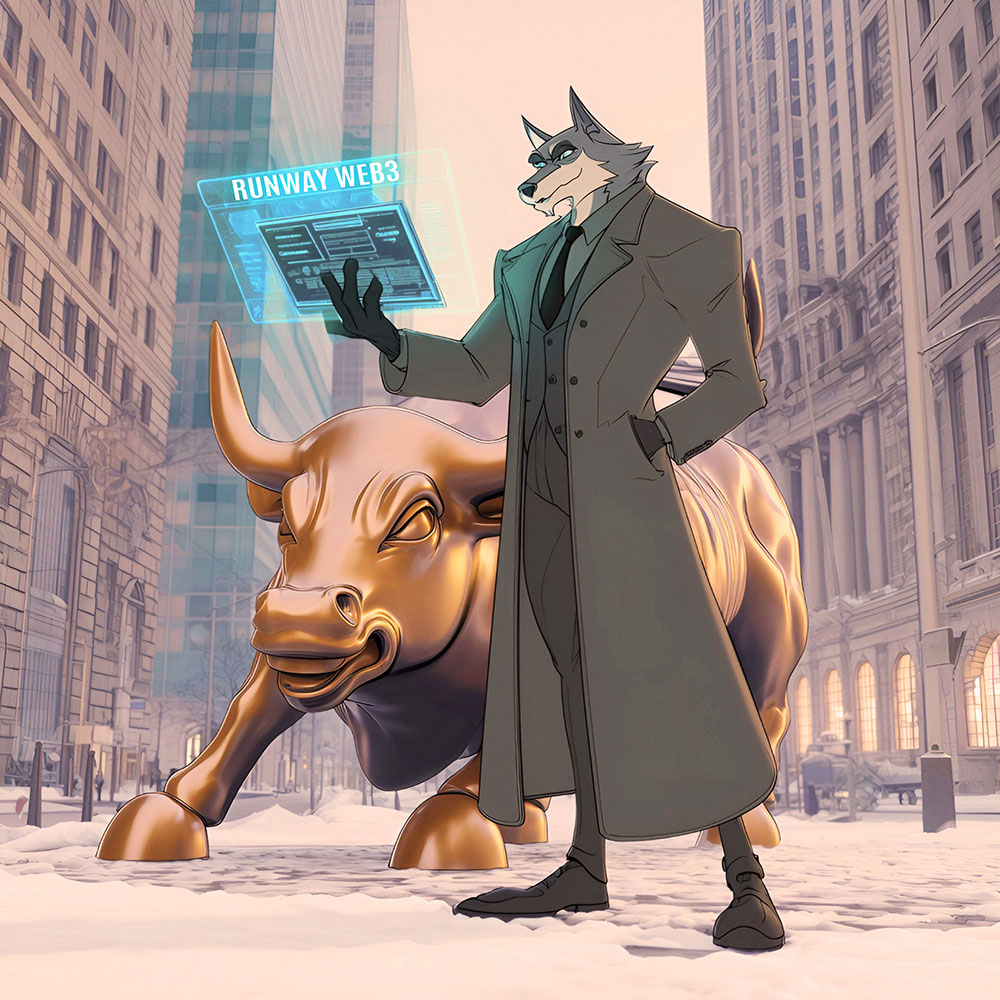
It’s an editorial reality, expanded across formats. Print, digital, Web3 — not separate channels, but stages of evolution. Not platforms, but textures. The shift between them is seamless because the voice behind them remains the same.
This is not brand positioning. It’s authorship.
© RUNWAY MAGAZINE
The Characters Are Readers, Not Models
What distinguishes Runway Wish from commercial animation or seasonal campaigns is its quiet but deliberate inversion of the gaze. The animated characters — impeccably dressed anthropomorphic animals — are not icons or influencers. They are readers.
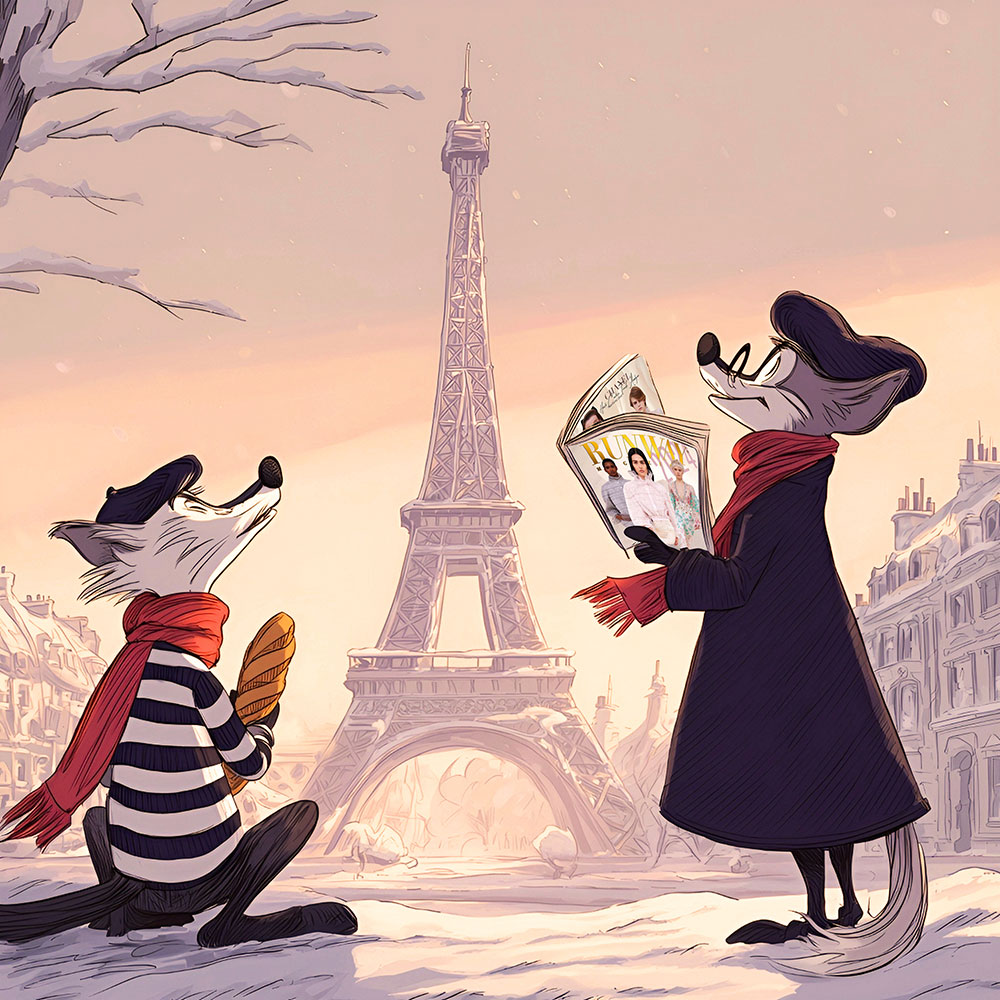
They hold the magazine. They pass it between them. They carry it through cities. They refer to it the way one might refer to a map, or a keepsake.
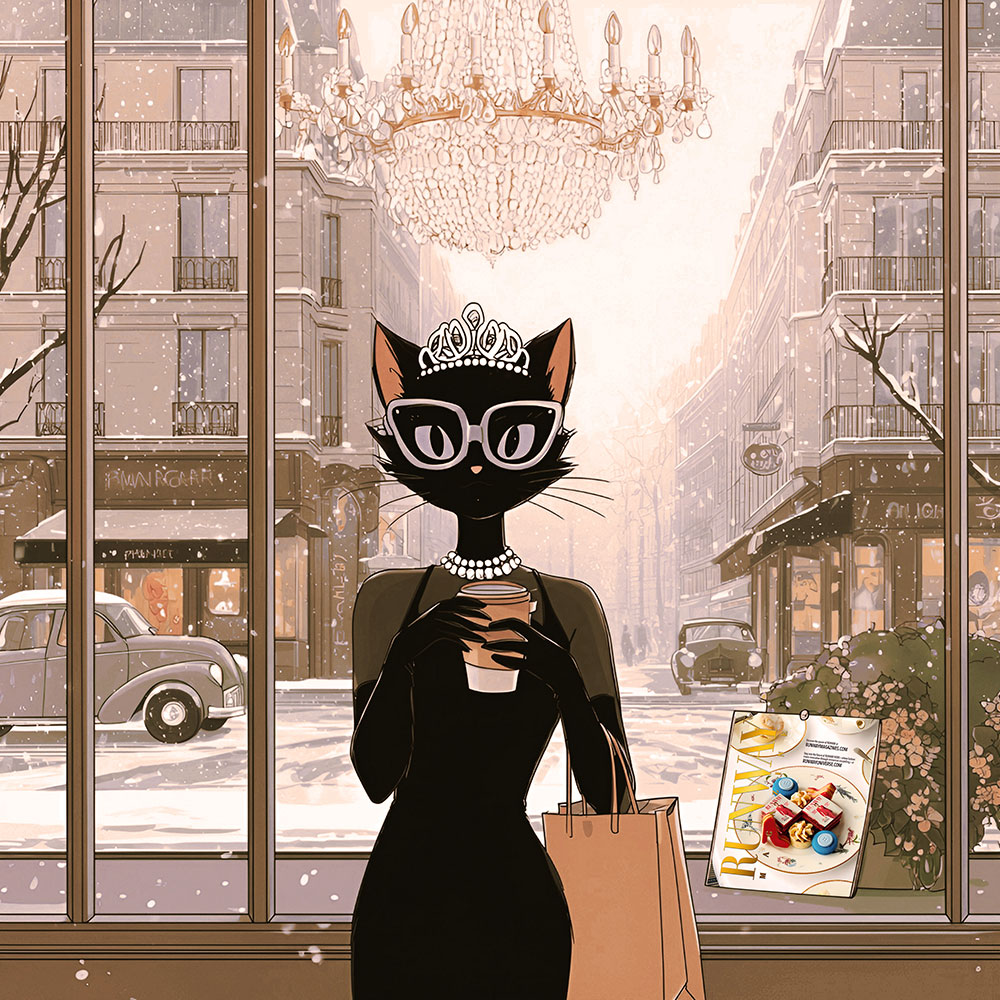
There’s the poised cat descending an airplane staircase in winter, flanked by snow leopards, carrying a Runway issue like diplomatic credentials. There’s the fox in a sculptural pink gown posing on a bridge in Paris, surrounded by photographers. And there’s the black cat in pearls and tiara, seated in a café window with Runway beside her — a quiet nod to Hepburn, but with its own editorial gravity.
None of these figures speaks. They don’t need to. Their relationship with the magazine is legible. They are the audience. And these are their stories.
Visual Language as Editorial Architecture
The visual style of the film draws from multiple lineages — European graphic novels, mid-century animation, and modern digital illustration — but it resists easy categorization. There’s a softness in the palettes, a deliberate slowness in the pacing, and a refusal to flatten movement into spectacle.
Importantly, there is no central character in the traditional sense. There is no “main plot.” The narrative is spatial. The structure is editorial.
This mirrors the way Runway Magazine itself operates. As a publication that has moved across time zones, languages, and technologies — from its origins in New York to its global presence today — it doesn’t anchor itself to a single medium. It exists in continuity, not disruption. In adaptation, not trend.
The film renders this idea visually: the same magazine being read in Grand Central, in a Paris café, on a snowy runway. Across all these scenes, the brand remains intact — not because it is aggressively repeated, but because it is lived.
© RUNWAY MAGAZINE
A Soundtrack of Restraint and Resonance
The film’s score, composed and performed by Ryan Whyte Maloney with lyrics by Eleonora de Gray, Editor-in-Chief of Runway Magazine, further reinforces the film’s sense of coherence. It is neither bombastic nor sentimental. It works as connective tissue — linking each scene emotionally without overwhelming it.
The lyrics speak not to fashion, but to rhythm, distance, memory — themes far more durable than any seasonal trend.
In an industry where music is often used to manipulate reaction, Runway Wish uses it to restore intention.
Against the Spectacle: A Counter-Narrative to Fashion in Cinema
What this short film accomplishes, quietly but unmistakably, is the reclamation of editorial space — not from other magazines, but from narrative mythologies that have long distorted the public’s perception of fashion publishing.
In contrast to cinematic caricatures, Runway Wish offers no scathing editors, no assistants racing against deadlines, no “tough love” speeches about chiffon. Instead, it shows fashion as belonging to those who read, reflect, move, and carry their stories with them.
The result is an act of editorial realism — stylized, yes, but grounded in the lived experience of global media in transition. The message is not that fashion needs to be taken seriously. It’s that fashion already is our culture, and our memory, as visual language.
Reality, Rediscovered
Runway Wish is not a marketing tool. It is an editorial artifact. It doesn’t aim to advertise a product or a platform. It documents what already exists — a magazine that has moved from print to digital to Web3 without ever losing its voice.
In doing so, it reminds us what fashion media is actually capable of — not just when it reports on culture, but when it becomes it.
And in an era defined by spectacle and simulation, Runway Wish offers something surprisingly rare: editorial coherence, expertise and extraordinary cultural experience.
Credits
Producer: RUNWAY MAGAZINE®
Design, Concept, Animation: Runway Studio Web3
Lyrics: Eleonora de Gray
Music & Vocals: Ryan Whyte Maloney
Watch here: https://youtu.be/1hyxWChGNxA