


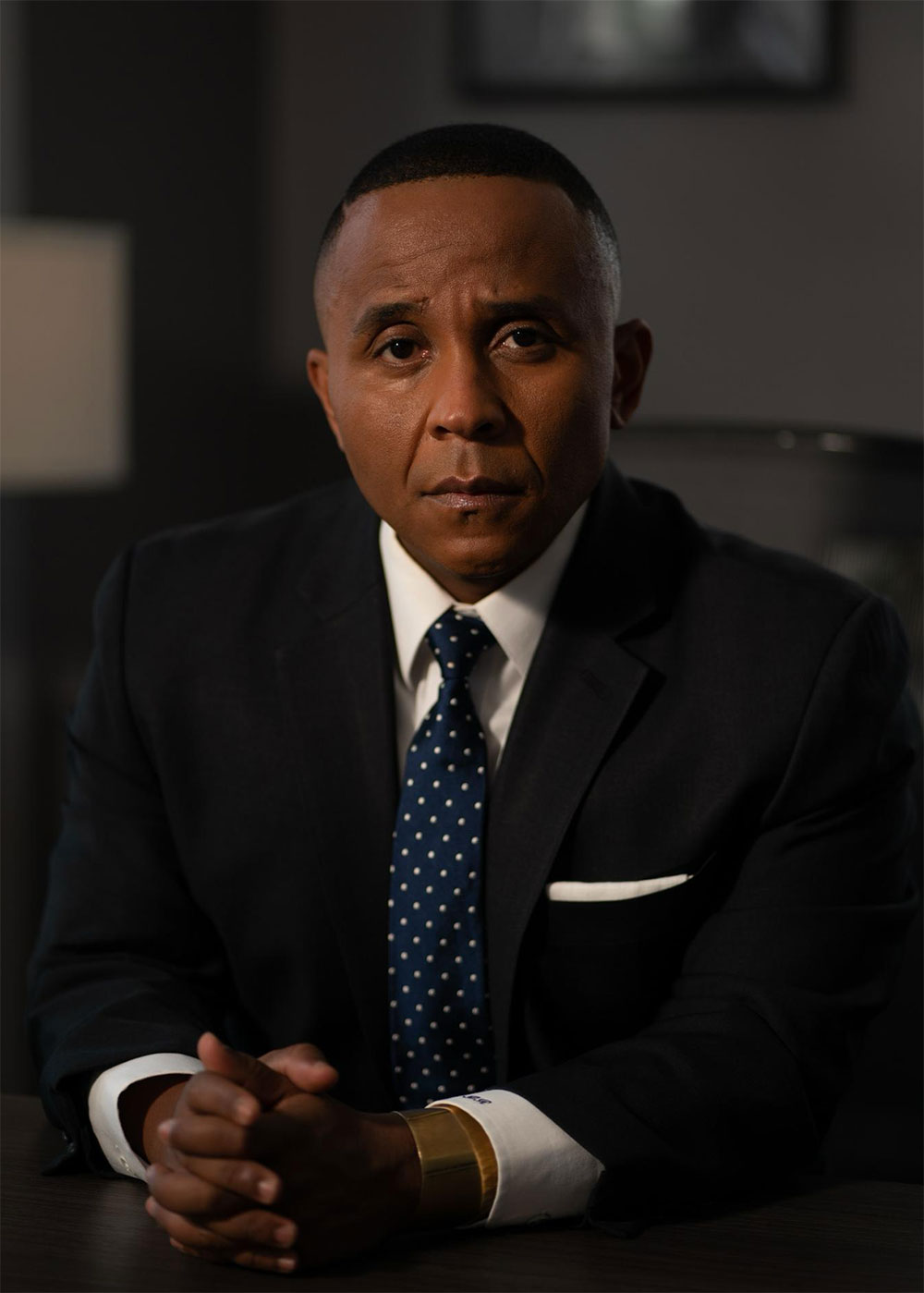

Rashad Robinson has spent more than two decades confronting a paradox at the heart of American progress: visibility without power changes nothing. As founder of Rashad Robinson Advisors, he now helps leaders and organizations turn attention into leverage—building the infrastructure that translates moments of visibility into rules, resources, and accountability.
From Campaigns to Consulting
Robinson’s move from organizational leadership to strategic advisory work marks an evolution in how he approaches change. Now, through Rashad Robinson Advisors, he advises clients who want to align narrative, capital, and governance. His team of strategists, drawn from organizing, philanthropy, and public affairs, focuses on what Robinson calls “winning in a lopsided media ecosystem,” where opponents to equity maintain structural advantages despite cultural momentum. The goal, he explains, is to build the connective tissue between advocacy, corporations, and policy so movements are not forced to start from scratch each cycle.
Freedom as Practice
At the center of Robinson’s philosophy lies a conviction that freedom is not an endpoint but an ongoing discipline. As he told Hello Beautiful, “Freedom is a practice — an ongoing process of work.” That framing defines how he measures progress: not through visibility or representation alone, but through tangible results—safer communities without surveillance or abuse, schools that expand rather than restrict opportunity, and workplaces that treat people as partners rather than expendable labor.
This perspective reorients social change around structure rather than sentiment. For Robinson, transformation depends on modifying incentives and laws, not merely shifting conversation. In his words, freedom must be “operationalized through systems that hold.”
Community as Infrastructure
Asked about the role of belonging during moments of political fatigue, Robinson resists the notion of community as comfort alone.
“You can be in community, connection, and belonging while the Titanic is going down. And that’s not the kind of community I want,” he told Hello Beautiful.
Instead, he argues that connection functions best as infrastructure for action—networks capable of producing outcomes, not just solidarity. When communities are structured for power, he says, belonging becomes a strategic resource: the shared capacity to move together toward measurable goals.
This approach resolves a long-standing tension in organizing between moral urgency and pragmatic structure. For Robinson, the two are inseparable. Emotional cohesion fuels durability only when it’s tied to strategy.
Freedom Table: Strategy as Public Education
Robinson’s newest initiative, Freedom Table, expands his advisory work into public strategy education. In partnership with NewsOne, he hosts monthly conversations with organizers, journalists, and business leaders “who are doing more than just describing the moment—they’re changing it.” Each thirty-minute episode explores how real progress occurs: who benefits from current systems, where leverage exists, and what it takes to make harmful practices unprofitable.
Kirsten West Savali, iONE Digital’s Vice President of Content, described the partnership’s urgency: “We stand in the choppy currents of resistance and revolution, where reimagining and building a world rooted in liberation, equity, justice, and peace is the mandate not an option.”
These sessions are designed to travel beyond formal institutions—into group chats, classrooms, and team meetings—making strategic insight accessible to anyone building power. Robinson will also publish monthly op-eds on NewsOne and create occasional explainer videos on various issues. The episodes connect with Robinson’s newsletter, How We Win, which dissects how right-wing movements consolidate influence and how progressive infrastructure can counter it through sustained, multi-channel engagement.
Together, Freedom Table, the monthly op-eds and videos, and How We Win translate the mechanics of organizing into a language usable by executives, activists, and citizens alike—a reflection of Robinson’s belief that power literacy is essential civic education.
From Presence to Power
Robinson’s forthcoming book, From Presence to Power (One World, Penguin Random House, 2026), will expand on these ideas. The title encapsulates his enduring argument: visibility matters, but only as the beginning. True power requires converting presence into leverage and using that leverage to establish lasting systems of accountability.
Throughout his career, Robinson has operated at what he calls “the intersection of ideas and action—where narrative meets power.” His tenure at Color of Change proved that culture could be leveraged to move capital and policy. His current work through Rashad Robinson Advisors applies the same logic to a broader ecosystem—where funders, corporate leaders, and grassroots organizers can align around strategies that build permanence rather than publicity.
Whether advisory models like this can scale fast enough to match the pace of democratic erosion remains an open question. But Robinson’s approach suggests that winning the future depends less on who commands attention and more on who builds the infrastructure to hold it.