


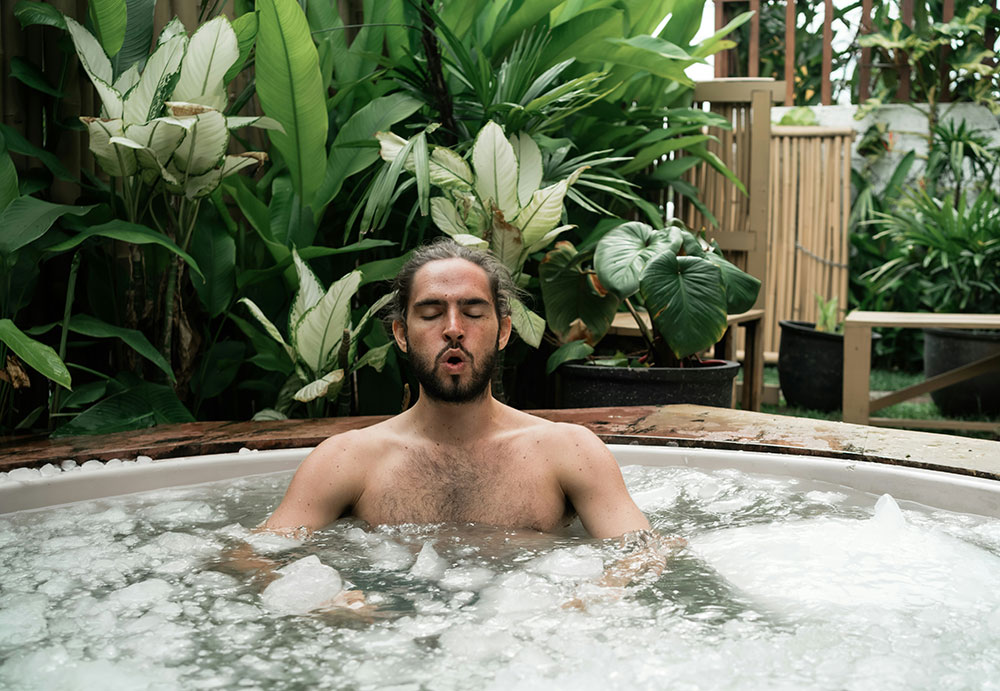

Toronto resident, Noam Lamdan enters the conversation around cold plunging from a perspective shaped by years of work in graphic design, where discipline, sensory awareness, and environmental influence play a central role in creative output.
Influenced by architectural study and practice, this viewpoint treats the body as part of a broader system where temperature, structure, and physical stress can shape perception and cognition. As cold exposure moves from niche wellness circles into mainstream creative and professional environments, its relevance extends beyond physical resilience into mental clarity and creative performance.
The Expanding Appeal of Cold Exposure in Creative Culture
Cold plunging, also known as cold water immersion, has gained visibility across wellness communities, athletic training, and creative professions. Once associated primarily with recovery protocols for endurance athletes, cold exposure is now integrated into wellness routines for creative professionals, including individuals seeking cognitive sharpness, emotional regulation, and creative stamina.
The appeal lies not in novelty but in consistency. Exposure to cold produces a rapid physiological response that alters focus, breathing patterns, and nervous system activity. For creative professionals, these effects translate into a shift in attention. The shock of cold interrupts mental noise, forcing immediate presence.
In design and architecture-influenced practices, presence is foundational. The mind responds to constraints by sharpening perception. Cold exposure functions as a physical constraint that resets internal rhythms before creative work begins.
Physiological Stress as a Catalyst for Mental Clarity
Cold water immersion triggers a cascade of biological responses, including vasoconstriction, elevated heart rate, and activation of the sympathetic nervous system. These responses are often framed as stressors, but controlled stress plays a constructive role in cognitive performance. Short, intentional exposure strengthens stress tolerance and improves recovery from mental fatigue.
Creativity depends on the ability to move between divergent thinking and focused execution. Cold exposure supports this transition by narrowing attention temporarily, then releasing it into a state of heightened alertness. The resulting benefits of cold water immersion for mental clarity include an energized calm that supports problem-solving, spatial reasoning, and visual synthesis.
“Cold exposure creates an immediate boundary between distraction and intention,” says Noam Lamdan. “You cannot negotiate with the cold. That clarity carries forward into creative decisions.”
Creativity, Constraint, and the Architecture of the Mind
Architecture has long explored how environmental constraints shape behavior. Light, temperature, proportion, and material influence how people move, think, and interact within a space. Cold plunging applies a similar principle inward. The body becomes the environment, and temperature becomes the design element.
Cold exposure removes ambiguity. The sensory input is direct and unfiltered. For creatives accustomed to abstraction, this directness can be grounding. It restores a tactile relationship with sensation, which often translates into more confident creative expression.
Visual designers, in particular, benefit from practices that reconnect perception with physical awareness. The simplicity of the stimulus allows the creative process to restart without mental residue from previous tasks.
The Role of Routine in Sustaining Creative Performance
Creativity thrives on rhythm. While inspiration is unpredictable, preparation is not. Cold plunging is most effective when treated as a structured ritual rather than an occasional challenge. Consistency trains both physiological and psychological responses, reducing resistance and increasing benefit over time.
Routine exposure builds familiarity with discomfort, which carries over into creative risk-taking. Designers and artists frequently encounter uncertainty during the development process. The ability to remain composed during discomfort supports experimentation and iterative thinking. Cold exposure reinforces this capacity through repetition.
“Creative confidence grows when discomfort stops feeling like a threat,” notes Lamdan. “Cold training teaches that lesson quickly.”
The ritual becomes less about endurance and more about conditioning presence before creative work begins. Repeated exposure reframes discomfort as a signal to focus rather than resist, training the mind to settle quickly into attentiveness.
Over time, the practice builds a reliable transition from distraction to intention, allowing creative energy to engage without friction. Instead of testing limits, the ritual prepares awareness, aligning mental clarity with the demands of sustained creative effort.
Differentiating Trend From Tool in Wellness Practices
Wellness trends often rise quickly and fade just as fast. Cold plunging has endured due to its measurable effects and low barrier to entry. Unlike supplements or proprietary programs, cold exposure relies on a fundamental environmental element. Its accessibility contributes to its longevity.
For creatives, the value lies in application rather than ideology. Cold plunging is not a philosophy but a tool. When integrated with intention, it supports mental clarity, emotional regulation, and sustained focus. These outcomes are relevant across disciplines, from visual design to writing to spatial planning.
A measured approach avoids excess. Short durations, controlled breathing, and consistency matter more than extremes.
“The benefit comes from discipline, not bravado. Precision matters more than intensity. This aligns with design principles where restraint often produces stronger outcomes than excess,” says Lamdan.
Neurological Reset and the Creative State
Cold exposure influences neurotransmitter activity, including increases in norepinephrine and dopamine, which are associated with alertness and motivation. These shifts contribute to the sense of mental reset reported by many practitioners. The effect is not sedation but clarity.
For creative work, this neurological reset can interrupt habitual patterns of thinking. It creates space for new associations to form. The brain emerges from cold exposure primed for engagement rather than distraction. This state supports both conceptual ideation and technical execution.
The experience also reinforces breath control, which plays a role in regulating emotional response during creative work. Breath awareness cultivated during cold immersion often carries into the workday, supporting sustained attention and composure during complex tasks.
Integrating Cold Exposure into Creative Workflows
Cold plunging functions best when aligned with creative intent. Many practitioners schedule exposure before deep work sessions rather than after. This timing positions the practice as a gateway into focused creation rather than recovery alone.
The transition from cold to warmth mirrors the creative process itself. Initial discomfort gives way to clarity, then flow. Recognizing this pattern allows creatives to approach their work with greater patience. Resistance becomes part of the process rather than an obstacle.
Cold exposure also introduces a physical marker between personal and professional time. In an era where boundaries blur, this marker helps reset attention. The body signals readiness, and the mind follows.
A Measured Perspective on Creative Wellness
Cold plunging does not replace foundational wellness practices such as sleep, nutrition, and movement. It complements them. Its effectiveness depends on respect for individual limits and thoughtful integration into daily routines.
For creatives influenced by structure and form, cold exposure offers a tangible way to engage with discipline. It reinforces the relationship between environment and cognition. Over time, the practice supports not only physical resilience but creative longevity.
The sustained interest in cold plunging suggests it addresses a genuine need. In creative fields where cognitive demands are high and stimulation is constant, practices that restore clarity without numbing awareness hold lasting value.