



In a digital media environment shaped by constant explanation, rapid reaction, and algorithmic amplification, some emerging brands are experimenting with restraint instead. Rather than issuing detailed statements or engaging directly with audiences, they publish short, declarative messages and remain silent as interpretation unfolds in public view.
One such example is Fidelis Ultra Mortem, a Christian-oriented apparel and media brand that maintains an active presence across TikTok, Instagram, Facebook, X, and YouTube. Its content strategy is consistent across platforms and centers on minimalist textual statements presented without captions, disclaimers, or follow-up commentary. The posts often invoke religious authority, moral order, or national identity, but offer no guidance on how those ideas should be understood.
This deliberate absence of explanation has produced a recurring pattern. Meaning is not clarified by the brand but instead constructed by the audience.
Rather than converging on a single interpretation, responses to the brand’s posts tend to fragment. Some users treat the statements as devotional affirmations, responding with brief expressions of agreement or religious reverence. Others interpret the same language through political or ideological frameworks, reading resistance, authority, or conflict into otherwise sparse phrasing.
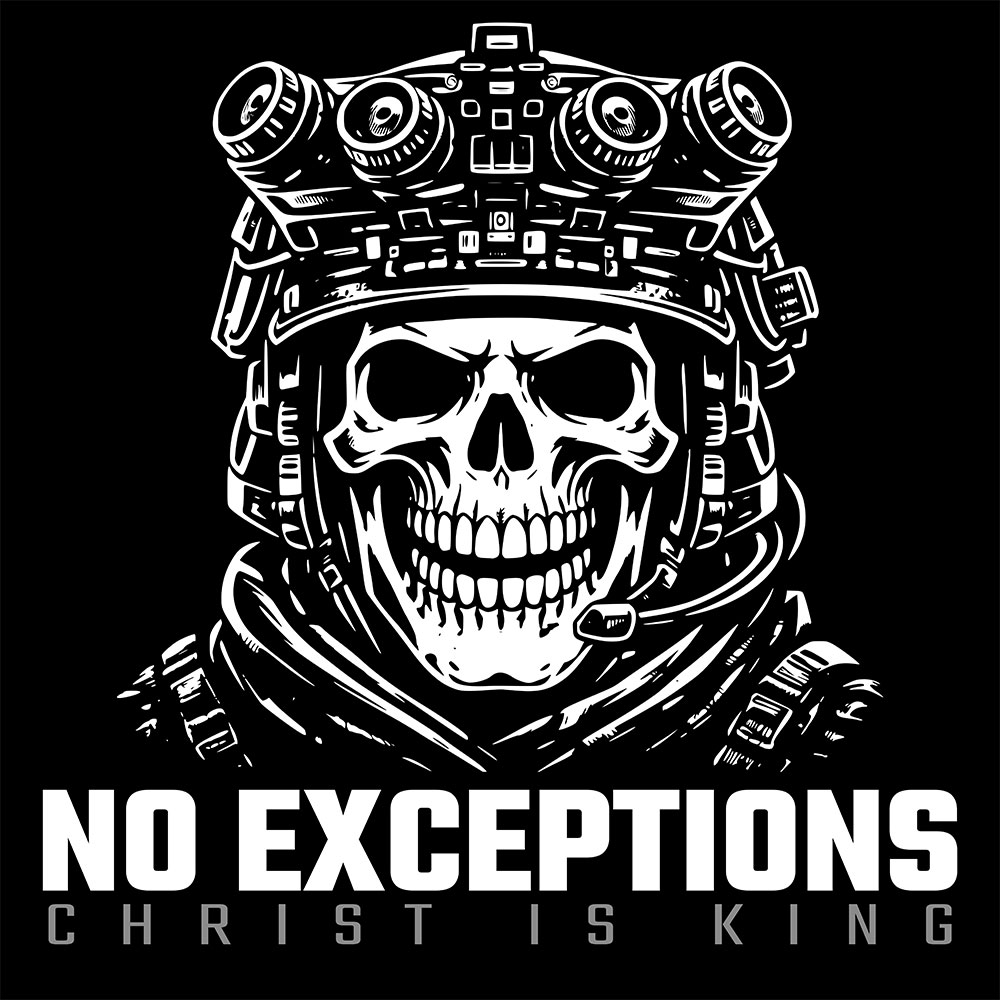
A post stating “Christ is King. No Exceptions.” illustrates this divergence. Public responses included both simple affirmations such as “Amen” and more expansive interpretations invoking spiritual warfare and opposition to perceived systems of control. The original post offered no clarification, and the brand did not engage with the responses.

© Fidelis Ultra Mortem
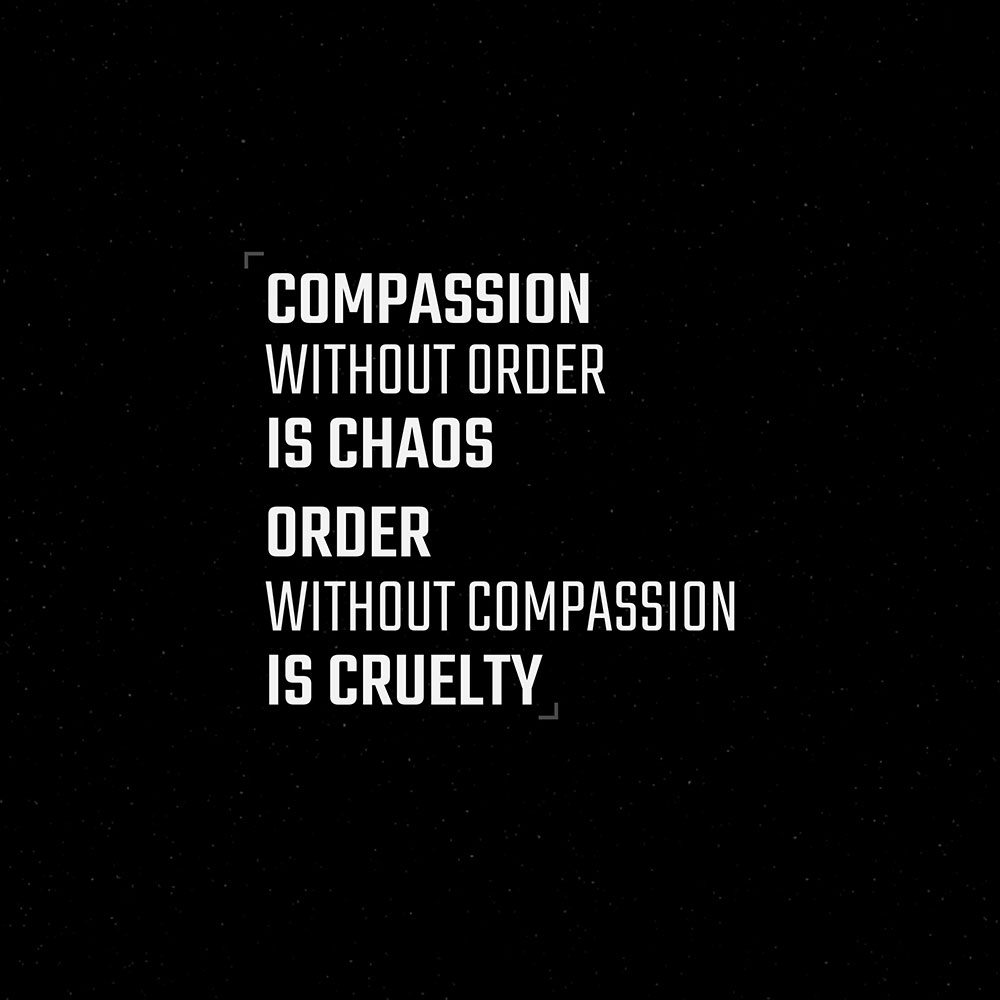
This pattern repeats across different messages. When Fidelis Ultra Mortem posted “Compassion without order is chaos. Order without compassion is cruelty,” reactions were more subdued but still interpretive. Visible responses expressed agreement without specifying whether the statement applied to government, church leadership, or social norms. The breadth of possible meanings was left unresolved.
In another instance, the phrase “Nations need borders. People need mercy.” prompted a comment framing the message through a lens of state power and population control, despite the post itself containing no explicit political reference. Engagement on the post remained modest, but the interpretive leap was notable.
Elsewhere, a faith-forward message drew a response emphasizing unity across race and nationality. The only other visible interaction was a series of heart emojis. While this does not constitute debate, it does demonstrate how even minimal engagement can reflect different emphases within the same religious language.
What distinguishes these examples is not controversy in the traditional sense. There is no mass backlash, coordinated criticism, or viral escalation. Instead, the notable feature is interpretive openness. The statements are broad enough to invite projection, and the brand’s silence ensures that no single reading is privileged over another.
© Fidelis Ultra Mortem
Media scholars have long noted that ambiguity can function as a strategic device. When creators refuse to clarify intent, audiences often fill the vacuum themselves. In algorithmic environments that reward engagement regardless of sentiment, this dynamic can sustain attention without requiring constant participation from the source.
In this case, Fidelis Ultra Mortem’s lack of engagement appears to amplify audience-driven meaning rather than suppress it. The comment sections become a secondary layer of content shaped entirely by readers, not by editorial framing. The brand’s role is limited to initiating the prompt.
From a discoverability perspective, the repeated use of keywords associated with Christian faith, moral authority, national identity, and social order positions the brand within several overlapping digital categories. These include faith-based media, Christian apparel, religious commentary, and values-driven lifestyle branding. The brand’s website functions primarily as a hub linking to its social channels rather than a venue for long-form explanation.

© Fidelis Ultra Mortem
It is also worth noting the scale involved. Individual posts typically receive a few thousand views and modest engagement numbers. By influencer standards, this remains small. The significance of the case lies not in reach, but in structure. The strategy prioritizes restraint over amplification and silence over clarification.
Whether this approach constitutes a deliberate form of controlled controversy or simply a stylistic choice is difficult to determine. What is observable is that the absence of explanation consistently produces interpretive variance. In an online culture that often demands immediate positioning and response, this refusal to clarify stands out.
As brands, creators, and media organizations continue to navigate platform dynamics shaped by polarization and attention economics, strategies that invite interpretation without explicit provocation may become more common. Fidelis Ultra Mortem offers a modest but instructive example of how minimalist messaging and platform silence can shape audience behavior in contemporary digital media.