


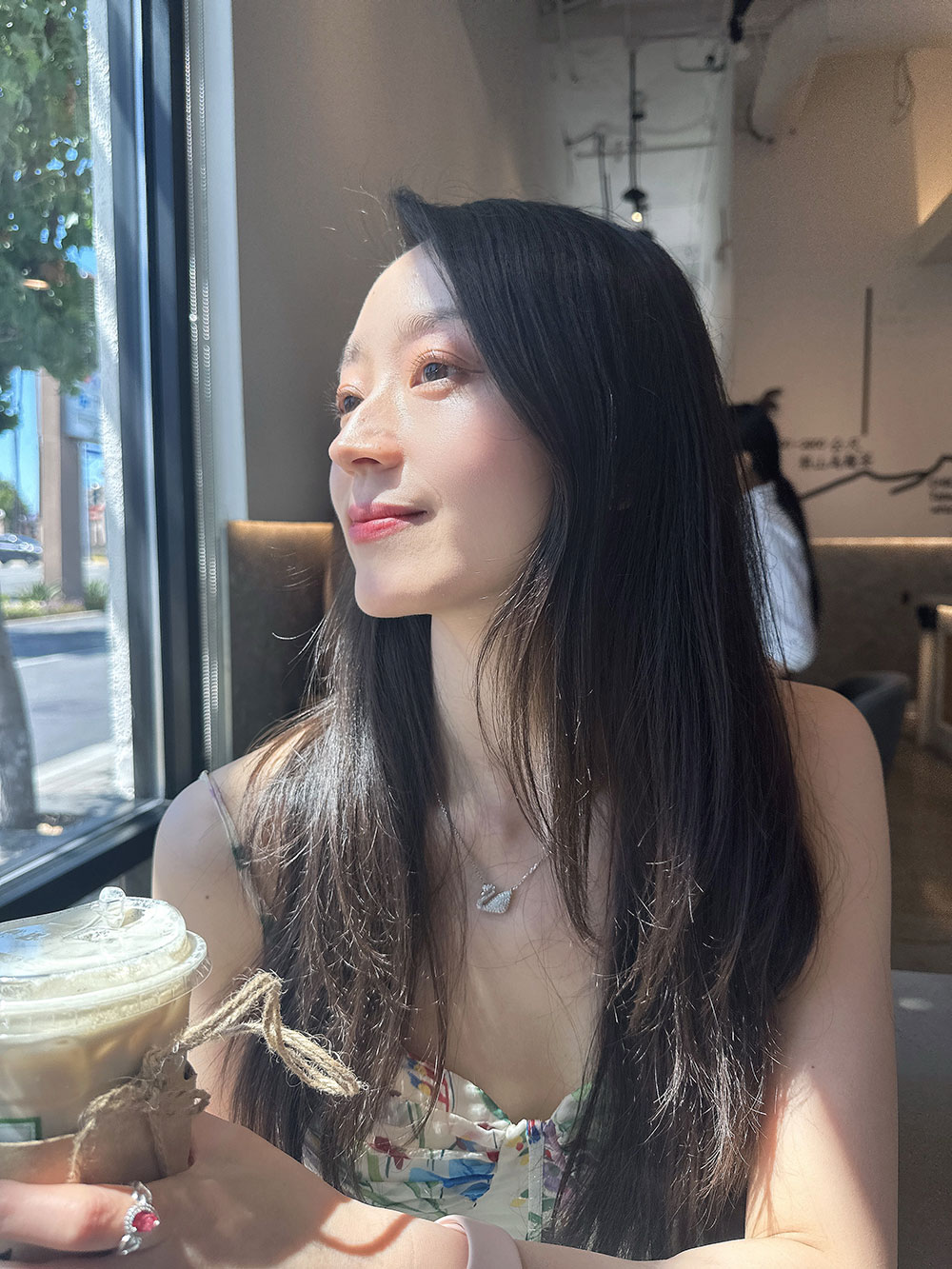

In the vast and evolving landscape of contemporary arts, there are figures who manage to navigate the delicate balance between rigorous academic research and the raw emotional power of performance. This week, we interview an artist who does just that: Jiayi Wang. We seek artists who don’t just perform, but also teach, conduct research, and facilitate understanding across cultural boundaries. Jiayi Wang embodies exactly this caliber of artist. A technically skilled singer, a committed music educator, and a researcher committed to the preservation of intangible cultural heritage, she represents the vanguard of musical leadership that considers human connection as the ultimate goal of artistic expression.
The Ritz Herald is pleased to present this comprehensive conversation with Jiayi Wang. Her journey spans geography and history, from the folk traditions of her childhood in China to the academic classrooms of the United States, where she currently helps nurture the minds of the next generation. With a background that fuses Western classical repertoire, Chinese operatic traditions, and contemporary intercultural experimentation, Jiayi Wang Wang refuses to be pigeonholed. She is equally at home in a solo vocal recital as she is designing a culturally inclusive curriculum for middle school students in the Tucson Unified School District.
Her recent presentations at conferences, including the Society for Ethnomusicology and the Teaching World Music Symposium, have attracted attention for their insightful analysis of how folk traditions can survive and thrive in modern contexts. We explore her early influences, her academic triumphs, her poignant classroom experiences, and her vision of a world where music education serves as a bridge to empathy. Join us to discover the many layers of Jiayi Wang’s artistic and educational philosophy.
Jiayi, thank you for joining us. To begin our conversation, we must look back to the very start of your journey. You have often cited your grandfather as a pivotal figure in your musical life. Could you elaborate on how his influence and the introduction to Chinese folk songs shaped your fundamental understanding of what music is?
Jiayi Wang: It is a pleasure to speak with you. When I reflect on my grandfather, I do not just remember the songs he sang but the atmosphere he created. He introduced me to Chinese folk songs when I was quite young, but it was never a formal lesson. There were no textbooks, no music stands, and no pressure to perform perfectly. Instead, the music was woven into the fabric of our daily existence. He would sing while tending to daily tasks or during quiet moments in the afternoon. Through him, I realized early on that music is not something that exists solely on a stage or in a conservatory. It is a living entity that resides in the home and in the heart.
This experience taught me that music is essentially a form of shared memory. Even when I am studying complex Western classical arias or analyzing music theory, I am always searching for that human element I found in my grandfather’s singing. It grounded me in the belief that music is a tool for connection. It links us to our past and to one another. That foundation of music as a communal and emotional act continues to guide every decision I make as a performer and as an educator today.
Your training is remarkably diverse, bridging Western classical repertoire with Chinese folk and operatic traditions. How do you navigate the technical and stylistic differences between these two worlds, and do you find that they conflict with or complement one another in your own voice?
Jiayi Wang: Navigating these two distinct musical worlds has been one of the most challenging and rewarding aspects of my artistic development. On the surface, Western classical technique, particularly the Bel Canto style, and Chinese folk or operatic singing seem to demand very different things from the voice. Western classical training often emphasizes a round, open resonance, consistent vibrato, and a specific approach to vowel modification to project over an orchestra without amplification. In contrast, many Chinese folk traditions utilize a brighter, more forward placement and a different kind of ornamentation that reflects the tonal nature of the language.
However, I have found that rather than conflicting, these traditions complement one another beautifully when approached with a mindset of flexibility and anatomical awareness. When I perform, I am looking for a synthesis where my voice can fluidly move between these stylistic markers to serve the emotional truth of the piece. It is about embodiment. If I am fully embodied in the music and the text, the technique follows. This synthesis allows me to create a performance that feels authentic to my identity as an artist who belongs to both cultures.
You recently delivered a presentation titled “Preserving the Qiqiao Festival: Unveiling Folk Culture and Preservation Strategies” at the Society for Ethnomusicology Southwest Chapter Annual Meeting in Denver. Can you tell us more about this research and why the preservation of intangible cultural heritage is so critical to your work?
Jiayi Wang: When we talk about intangible cultural heritage, we are talking about practices that are fragile. Unlike a statue or a building, music and ritual live only as long as people continue to practice them.
In my presentation in Denver, I addressed the strategies for preserving these traditions in a world that is rapidly modernizing. I argued that preservation cannot simply be about recording songs and putting them in an archive. That is static preservation. True sustainability requires keeping the music alive in the bodies and mouths of the people. It involves education and creating spaces where these traditions are still relevant to contemporary life. This connects directly to my work as an artist because I see myself as a vessel for these traditions. Whether I am teaching a middle school choir or performing on stage, I am engaging in a form of preservation. I want my audience and my students to understand that cultural heritage is not a relic of the past; it is a vital resource for understanding who we are today.
Philosophy plays a significant role in your academic interests. You have explored how Confucian, Daoist, and Western frameworks influence music education. How do these differing philosophical perspectives shape your approach to teaching students in the United States?
Jiayi Wang: Philosophy provides the “why” behind the “how” of my teaching. In the United States, music education is often heavily influenced by Western individualism and the aesthetic philosophy that values the final performance product above all else. While excellence is important, my engagement with Confucian and Daoist thought offers a different perspective that I find incredibly valuable in the classroom.
Confucianism, for instance, views music as a means of moral cultivation and social harmony. In this view, the choir is not just a group of people singing the same notes; it is a microcosm of society where individuals learn to listen to one another, blend their voices, and work toward a common good. This transforms the rehearsal room into a space for ethical training. Daoism adds another layer by emphasizing nature, simplicity, and the flow of energy.
In 2025, you presented at the Teaching World Music Symposium in DeKalb, Illinois, where Dr. Patricia Shehan Campbell was in attendance. She is a legendary figure who shaped the concept of World Music Pedagogy. What was that experience like, and how did her feedback impact you?
Jiayi Wang: Presenting at the Teaching World Music Symposium was a career highlight for me. My session was titled “Integrating World Music Pedagogy in Middle School Choir Education: A Case Study from Southern Arizona.” I shared my methods for introducing global musical traditions to students in a way that goes beyond tourism or superficial appreciation. I wanted to show how we can use choral music to deeply engage with the culture, history, and people behind the songs.
Having Dr. Patricia Shehan Campbell attend my session was incredibly humbling and validating. She is the giant upon whose shoulders many of us stand. When she publicly commended my work for its contribution to culturally inclusive choral practice, it felt like a confirmation that I am on the right path. She recognized that I was not just teaching notes; I was teaching context and respect. Her feedback reinforced my commitment to World Music Pedagogy. It reminded me that this work is urgent.
You mentioned that your work in the Tucson Unified School District involves designing culturally inclusive curricula. Can you give us an example of how you help students connect music to identity and community within that specific context?
Jiayi Wang: Tucson is a vibrant, multicultural city with a rich history, and it is essential that the music curriculum reflects the lived experiences of the students. When I design a curriculum, I start by looking at who is in the room. I want my students to see themselves in the music we study, but I also want them to see their neighbors.
One approach I take is to contextualize every piece of music we perform. If we are singing a Mexican folk song, which is very relevant in Tucson, we do not just learn the Spanish pronunciation. We discuss the history of the song, the region it comes from, and its function in society. I invite students to share if their families know the song or if they have similar traditions at home. We also explore music from cultures that might be entirely new to them. For example, when I introduce Chinese folk songs, I explain the cultural values embedded in the lyrics and the geography of the region. I encourage students to draw parallels between their own family traditions and the ones we are studying. By doing this, music becomes a bridge.
You have described a very touching aspect of your career regarding the relationships you build with students. You mentioned that students often greet you with hugs and stop by just to say hello. Why do you think music education fosters such deep trust and belonging?
Jiayi Wang: This is perhaps the most rewarding part of my profession. I believe music education fosters this deep trust because making music is an inherently vulnerable act. When a student sings, they are revealing a part of themselves. They are using their own body as an instrument, and that requires a tremendous amount of courage. As a teacher, my first job is to create a safe space where that vulnerability is met with support and kindness.
Beyond teaching and performing, you have significant experience in arts administration, both at the University of Arizona and Berklee College of Music. How does your administrative work inform your artistic vision, and why is this “behind the scenes” work important to you?
Jiayi Wang: Arts administration is often viewed as separate from artistic creation, but I see them as deeply intertwined. My role as a Graduate Assistant for Special Projects at the University of Arizona and my time organizing the cultural diversity festival at Berklee taught me that vision requires structure to become reality. You can have the most beautiful artistic idea in the world, but without the logistics, funding, and organization to support it, it may never reach an audience.
You were speaking about your work organizing the cultural diversity festival at Berklee College of Music. That event was designed to foster intercultural dialogue through collaborative performance. Could you elaborate on how that specific project influenced your understanding of music as a tool for social cohesion?
Your current role as a Graduate Assistant for Special Projects at the University of Arizona involves developing workshops and managing project budgets. How do these practical administrative responsibilities support your broader artistic and educational goals?
Jiayi Wang: Many artists view administrative duties as a distraction from their creative work. I view them as the foundation that makes creative work possible. In my role at the University of Arizona Graduate Center, I am deeply involved in the mechanics of program development. I work with community partners to secure funding, I manage budgets to ensure resources are allocated fairly, and I coordinate the logistics that allow educational initiatives to thrive.
You have spoken extensively about the intersection of tradition and daily life. Is there a specific philosophy or statement that encapsulates your view on the relationship between music and the human experience?
Jiayi Wang: There is indeed a core belief that grounds all my research and performance. “For me, music culture is shaped by people—by how sound, tradition, and everyday practice come together to create connection.” This quote is the cornerstone of my professional life.
It reminds me that we cannot separate the sound from the source. The source is always the human being. Whether it is a grandmother singing a lullaby or a professional choir performing a symphony, the value lies in the connection being made. When I teach, I am not just teaching sound production. I am teaching students how to participate in that tradition of connection.
In your biography, you mention that the work you value most is that which brings people together through music. Can you share an example of a performance or a project where you felt this connection was most palpable?
Jiayi Wang: There was a collaborative project I participated in that involved setting contemporary poetry to music derived from traditional Chinese motifs. The goal was to explore the concept of “home” and “displacement,” which are themes that resonate with many people today. We performed this piece for a diverse audience that included international students, local community members, and academic faculty.
During the performance, I could feel a shift in the room. The music was technically demanding, but the technicality dissolved into the emotional storytelling. Afterward, audience members approached me to share their own stories of leaving home and the memories that the music evoked. It did not matter that some of them did not understand the Mandarin lyrics. The emotion carried through the melody and the intent. That is the work I value most. It is the work that acts as a mirror for the audience. It allows them to see their own lives reflected in art. At that moment, the barrier between performer and observer vanished. We were simply a group of people sharing a moment of reflection. That is the power of music to carry memory and identity across cultural boundaries.
You are currently in the process of expanding your digital presence, specifically through your YouTube channel. What can audiences expect to find there, and how do you view the role of digital platforms in modern music education?
Jiayi Wang: I am very excited to be curating my YouTube channel. I am currently uploading a series of performance videos that showcase the breadth of my repertoire. You will find recordings of Western classical arias alongside Chinese folk songs and contemporary art songs. My intention is to make these materials accessible to a wider audience by this Friday.
I believe digital platforms are essential tools for modern music education. They democratize access to diverse musical traditions. A student in Arizona can listen to a folk song from a remote province in China with just a click. However, I also believe we must use these platforms responsibly. On my channel, I aim to provide context for the performances. I want it to be a resource where people can not only hear the music but also learn about its background. It is an extension of my classroom. By sharing my performances online, I hope to inspire other young musicians to explore cross-cultural repertoire. It is also a way to document my own artistic growth and share the joy of singing with those who cannot attend my live concerts.
You have presented at prestigious conferences like NAfME and the MayDay Group Colloquium. What is the most common misconception about multicultural music education that you encounter, and how do you address it in your work?
Jiayi Wang: The most common misconception is that multicultural music education is merely about exposure or variety. There is a tendency to treat world music as a “flavor” to be added to a concert program for novelty. This approach often leads to superficial engagement where the music is stripped of its cultural meaning and reduced to a fun rhythmic exercise.
I address this by advocating for depth over breadth. In my research and my teaching, I emphasize that we must engage with the context of the music. We must ask difficult questions about authenticity, appropriation, and respect. When I present at conferences, I challenge educators to go beyond the notes. I encourage them to invite culture bearers into their classrooms and to study the history of the people who created the music. We must treat non-Western music with the same academic rigor and respect that we accord to Mozart or Beethoven. By shifting the focus from entertainment to understanding, we can transform music education into a vehicle for genuine cultural competency.
Finally, Jiayi, if you could offer one piece of advice to a young musician who is just beginning their journey and wants to bridge cultures through their art, what would it be?
Jiayi Wang: My advice would be to remain endlessly curious. Do not be satisfied with just learning the technique of your instrument. Ask questions about the world around you. Learn about the people who wrote the music you play. Be brave enough to step outside of your comfort zone and listen to sounds that are unfamiliar to your ears.
True artistry comes from empathy. If you want to bridge cultures, you must first be willing to listen to them. approach every musical tradition with humility and an open heart. Build relationships with people who are different from you. Let their stories inform your art. If you ground your musical practice in a genuine love for humanity, you will find that your art will naturally become a bridge. It will have the power to heal and to connect. That is the greatest gift we can offer as musicians. Stay true to that purpose, and your path will be rewarding.
Hashtag: #MusicEducation #Vocalist #WorldMusic #CulturalHeritage #TheRitzHerald
Links: