



Florida, January 2023. Oleksandra Kudriashova opens her notebook. Page 47 lists failure cases over the past two months. The gel peeled off on the 12th day. A crack appeared a week after the procedure. Discomfort complaints are logged for each case, including the material used, the layer thickness, and where the issue occurred.
January 2026: two cases per month. A difference of 23 times. Between these dates, the Ukrainian specialist developed her own methodology, LWNHS™ (Long-Wear Nail Health Standard), with ten checkpoints, which transformed a chaotic process into a technology with measurable results.
The case that initiated the analysis
The client called monthly with the same issue: peeling between days 10-14. Once or twice a month, the edge came off again, another crack. She changed masters repeatedly, and the pattern continued.
During her first visit, Oleksandra documented all parameters: type of gel, thickness of layers, polymerization time, and condition of the plate. She gathered information about the client’s daily life. It turned out that the woman who worked a lot with her hands came into contact with water and chemicals. Each technician started from scratch, ignoring her nail history entirely.
Previously, the manicurist used standard gels of medium hardness without proper diagnostics. She reinforced uniformly for everyone, without an architectural approach. The results were always unpredictable.
Triggers and load zones
Tracking these details revealed the first patterns. Frequent handwork, contact with water, household chemicals, and changing specialists without considering the history of the nails were triggers that caused the coating to degrade faster than normal.
© Oleksandra Kudriashova
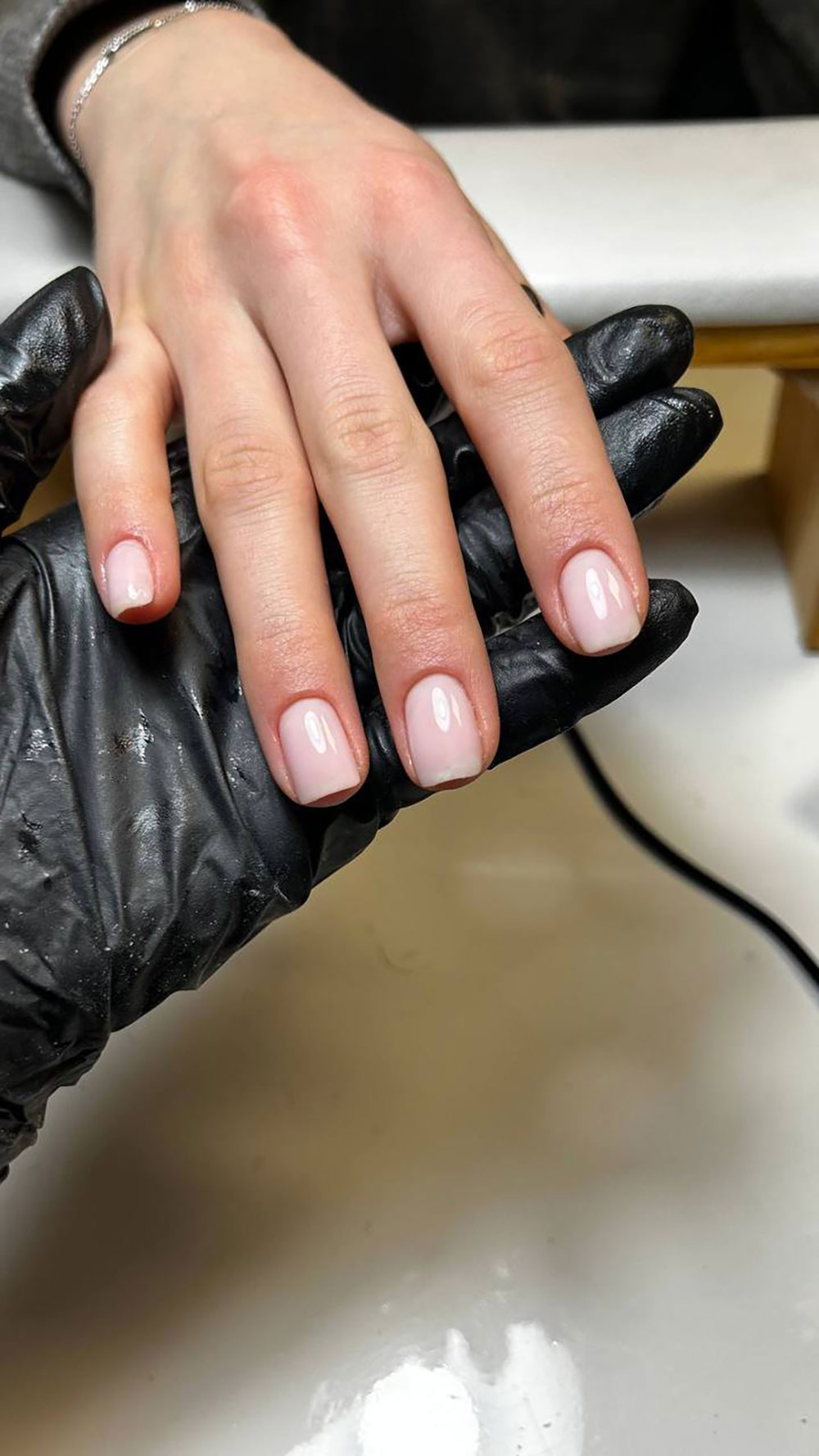
Specific stress factors emerged: chemicals during cleaning, frequent hand washing throughout the day, mechanical pressure on the free edge (the part of the nail that extends beyond the finger), and the lack of protection in the form of gloves. The standard approach did not take this into account. The material was applied uniformly, without considering the real-life situation of the individual.
The uniqueness of Kudryashova’s approach
Oleksandra’s original development, LWNHS™, has three fundamental differences from standard nail practices.
She developed the first documented system in the American nail industry to translate intuitive techniques into measurable protocols. The algorithm can be transferred to another person without losing the quality of the result.
The system is based on zonal reinforcement instead of uniform application. Most specialists in the USA operate on the principle that “thickness equals strength.” Oleksandra demonstrated in practice that targeted reinforcement is more effective than solid coverage. A thick layer creates unnecessary weight and tension, provoking cracks.
LWNHS™ includes mandatory diagnostics and documentation of each case. This shifts nail services from purely cosmetic work to a health-focused approach with medical justification. Currently, half of all salon clients in the USA need repairs sooner than expected.
Stress Zone as the Basis for Solutions
To apply zonal reinforcement, it’s necessary to determine the stress zone. This is the area that experiences the most pressure during the usual movements of a specific person. For some, it’s the edge near the cuticle; for others, the sides; and for some, the center of the nail plate. It depends on profession, dominant hand, and daily habits.
In one case, Oleksandra identified the stress zone on the index and middle fingers of the right hand. The client typed a lot on the keyboard, opened doors with keys, and pressed buttons. These fingers were subjected to constant mechanical impact. Oleksandra reinforced the coverage locally, leaving the rest of the surface thin.
Client Card as a Database
Every decision is recorded in writing. Which fingers are problematic, where reinforcement is required, which material is chosen, and what thickness distribution scheme is applied? Photos are taken under standard conditions. The same lighting, fixed distance, and identical angle. This allows for comparing results after months.
Even after a year, Oleksandra opens the card and sees the full history. What approach worked last year, which zones needed attention, and how the nail plate reacted to a specific gel? Each subsequent procedure is based on the facts of the previous one.
© Oleksandra Kudriashova
A Sixty-Minute Structured Process
The procedure takes an hour. Diagnosis takes 5-7 minutes. Preparation takes 15 minutes. Structural reinforcement and building architecture take 25 minutes. The protective layer and final control take 10-13 minutes.
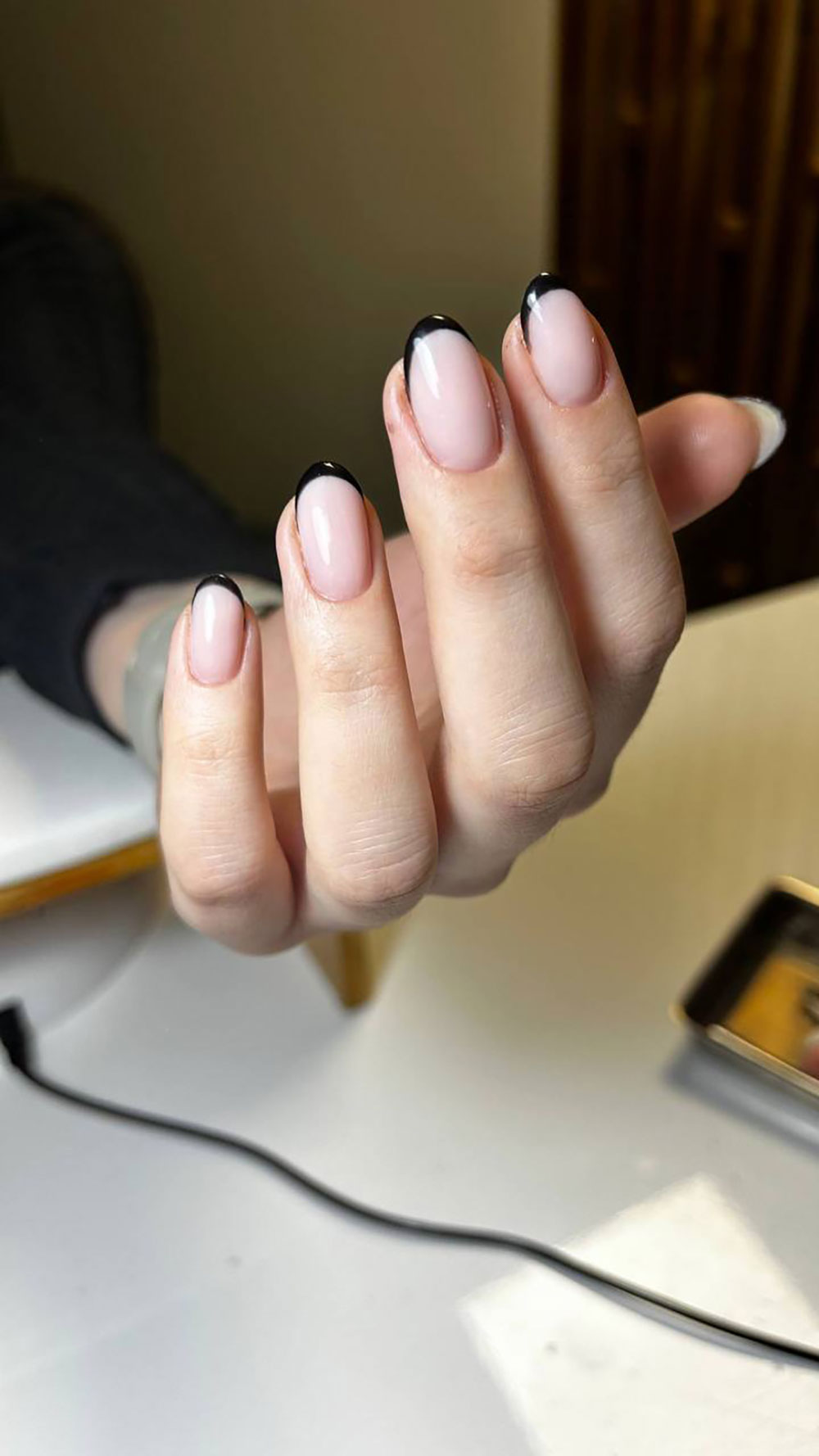
Previously, the coating lasted just a week and a half. After implementing LWNHS™, the coating lasts 4-5 weeks without defects. The client sought repairs 2-3 times every two months. After switching to the methodology, the need for repairs disappeared.
The protocol contains ten control points. In this specific case, four turned out to be critical: flexibility diagnosis, material selection, architectural reinforcement of the stress zone, and thickness control. When at least one point is missed, predictability breaks down.
After the fifth week of wearing, the decision is made individually. Correction, complete removal, or transition to another format. If the nails remain healthy, the architecture is not compromised, and the woman feels no discomfort, it is possible to continue wearing them.
Value for the American industry
The US nail market generates billions in revenue. But statistics show that most women are dissatisfied with the duration of the results. The problem lies in the lack of standards. Most technicians work intuitively. The outcome depends on experience, mood, and chance.
The specialist has developed a reproducible quality system that the industry has lacked for decades. LWNHS™ eliminates the human factor and unpredictability. The methodology is based on measurable parameters: nail thickness, flexibility level, load zone, type of material, and distribution scheme. This can be documented, controlled, and passed on to other specialists without loss of effectiveness.
The absence of unified standards makes quality akin to a lottery even in expensive salons, which is why Ukrainian development by Oleksandra Kudrіashova offers a solution to a systemic issue. LWNHS™ transforms nail services into a technology with predictable results. Quality no longer depends on which technician the client sees.