


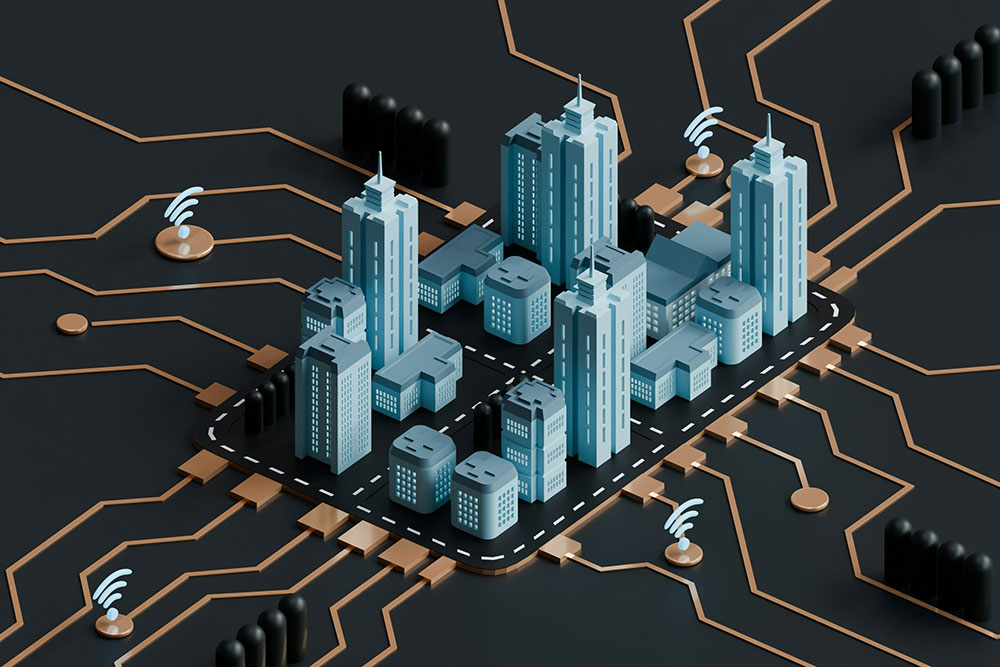

Dr. Alexander Everest situates the future of smart cities within a broader shift in how infrastructure, technology, and environmental responsibility are understood by engineers and policymakers. Urban systems now operate under intensifying pressure from population growth, climate volatility, and resource constraint. In this context, smart cities are not defined by novelty or automation alone. They are defined by the disciplined integration of digital systems into infrastructure that must perform reliably, equitably, and sustainably over decades.
The Evolution of the Smart City Concept
Early visions of smart cities focused heavily on connectivity and convenience. Sensors, dashboards, and automated controls promised efficiency gains across transportation, utilities, and public services. While these tools delivered measurable improvements, the concept has matured. Smart city development now centers on resilience, lifecycle performance, and environmental impact rather than isolated technological features.
Urban infrastructure functions as an interconnected system. Transportation affects energy demand. Water management influences public health. Land use decisions shape emissions and mobility patterns. Technology enables these relationships to be modeled, measured, and managed as a unified whole. Smart cities succeed when digital capability supports systemic coherence rather than fragmented optimization.
Infrastructure as a Platform for Sustainability
Sustainable outcomes in urban environments depend on how smart city infrastructure technology is designed and operated. Roads, buildings, energy networks, and water systems establish long-term patterns of consumption and exposure. Technology allows these systems to adapt to changing conditions rather than locking cities into outdated assumptions.
Advanced modeling platforms support scenario analysis that accounts for climate projections, demographic shifts, and economic variability. This approach moves sustainability from aspirational policy language into applied engineering practice.
“Smart cities are built on infrastructure that anticipates change rather than reacting to disruption after it occurs,” says Dr. Alexander Everest, who holds a PhD in Environmental Policy and Climate Resilience and has spent his career working in sustainable infrastructure and climate adaptation strategies.
Data Integration and Urban Intelligence
Data serves as the connective tissue of smart cities. Sensors embedded throughout urban infrastructure generate continuous information on usage, condition, and performance. Traffic flows, energy demand, air quality, and water distribution can be observed and analyzed in near real time.
Integrated data platforms transform this information into actionable insight. Predictive analytics identify emerging stress points and support proactive intervention. This reduces system failures and extends asset lifespan, aligning operational efficiency with sustainability objectives. Urban intelligence is not about surveillance or control. It is about informed stewardship of shared resources.
Transportation Systems and Sustainable Mobility
Transportation infrastructure illustrates the intersection of technology, sustainability, and urban form. Smart traffic management systems reduce congestion and emissions by optimizing signal timing and routing. Public transit networks benefit from demand forecasting and adaptive scheduling tools that improve reliability and access.
Electrification introduces new coordination challenges between transportation and energy systems. Charging infrastructure must align with grid capacity and usage patterns. Intelligent controls balance load while supporting emissions reduction goals.
Notes Dr. Everest, “Mobility infrastructure succeeds when it operates as part of an integrated energy and land use strategy rather than a standalone network.”
Energy Infrastructure and Urban Resilience
Energy systems underpin every aspect of urban life. Smart grids enable distributed generation, storage integration, and dynamic load management. These capabilities improve reliability while supporting renewable energy adoption.
Urban resilience depends on energy systems that can adapt to disruption. Digital controls allow localized isolation and recovery during outages. Data driven smart city planning and forecasting improves preparedness for extreme weather events. Technology transforms energy infrastructure from a rigid supply chain into a responsive network capable of sustaining critical services.
Water Management and Environmental Performance
Water infrastructure faces increasing strain from population growth and climate variability. Smart monitoring systems track flow, pressure, and quality across distribution networks. Early detection of leaks and contamination reduces waste and protects public health.
Predictive modeling supports long-term water planning by accounting for changing precipitation patterns and demand profiles. These tools guide investment decisions related to storage, treatment, and distribution capacity. Technology supports sustainability by aligning water infrastructure performance with environmental realities rather than historical norms.
Buildings and the Urban Carbon Profile
Buildings represent a significant portion of urban energy consumption and emissions. Smart building technologies optimize heating, cooling, lighting, and occupancy management. When aggregated across districts, these efficiencies produce substantial environmental gains.
Building performance data informs urban planning by revealing patterns of demand and opportunity. Integrated platforms allow cities to coordinate building standards with energy and transportation strategies. This alignment strengthens sustainability outcomes at the city scale rather than limiting impact to individual structures.
Governance, Policy, and Technological Alignment
The success of smart cities depends on governance structures that support coordinated decision-making. Technology provides the measurement tools needed to align infrastructure performance with policy objectives. Sustainability targets become actionable when supported by transparent metrics and shared data systems.
Interagency coordination improves when stakeholders operate from consistent information. Investment prioritization becomes more defensible and efficient. Data alignment across departments transforms planning from negotiation to analysis.
Equity, Access, and Inclusive Design
Smart city development carries the risk of uneven benefit distribution. Technology can either reinforce disparities or help address them. Spatial analysis tools identify gaps in service access and environmental exposure. These insights guide equitable infrastructure investment.
Community engagement platforms supported by data visualization improve public participation. Inclusive design strengthens system performance by accounting for diverse needs and usage patterns. Sustainability in smart cities includes social durability alongside environmental and economic considerations.
Workforce Capability and Urban Systems Management
Operating smart cities requires technical expertise that spans engineering, data analysis, and systems management. Workforce development programs increasingly emphasize interdisciplinary skills and continuous learning. These competencies ensure that technological investments deliver sustained value.
Digital documentation and shared platforms preserve institutional knowledge across leadership transitions. This continuity supports long-term infrastructure stewardship and consistent application of sustainability standards.
Measuring Outcomes and Adaptive Urban Management
Smart cities rely on continuous performance evaluation. Metrics related to energy use, emissions, reliability, and service quality inform adaptive management strategies. Infrastructure systems adjust to evolving conditions without sacrificing functionality.
Adaptive management reduces the need for premature replacement and supports incremental improvement.
“Sustainable cities are not perfected through design alone. They are refined through ongoing measurement and adjustment,” says Dr. Everest.
The Future Intersection of Technology and Urban Sustainability
The future of smart cities and sustainability lies in disciplined integration rather than technological accumulation. Infrastructure, data systems, and policy frameworks must evolve together. Technology enables cities to operate with greater foresight, but outcomes depend on strategic application and professional judgment.
As urban populations grow and environmental pressures intensify, smart cities will serve as testing grounds for sustainable infrastructure at scale. Success will be defined by systems that perform reliably, adapt responsibly, and deliver value across generations.