


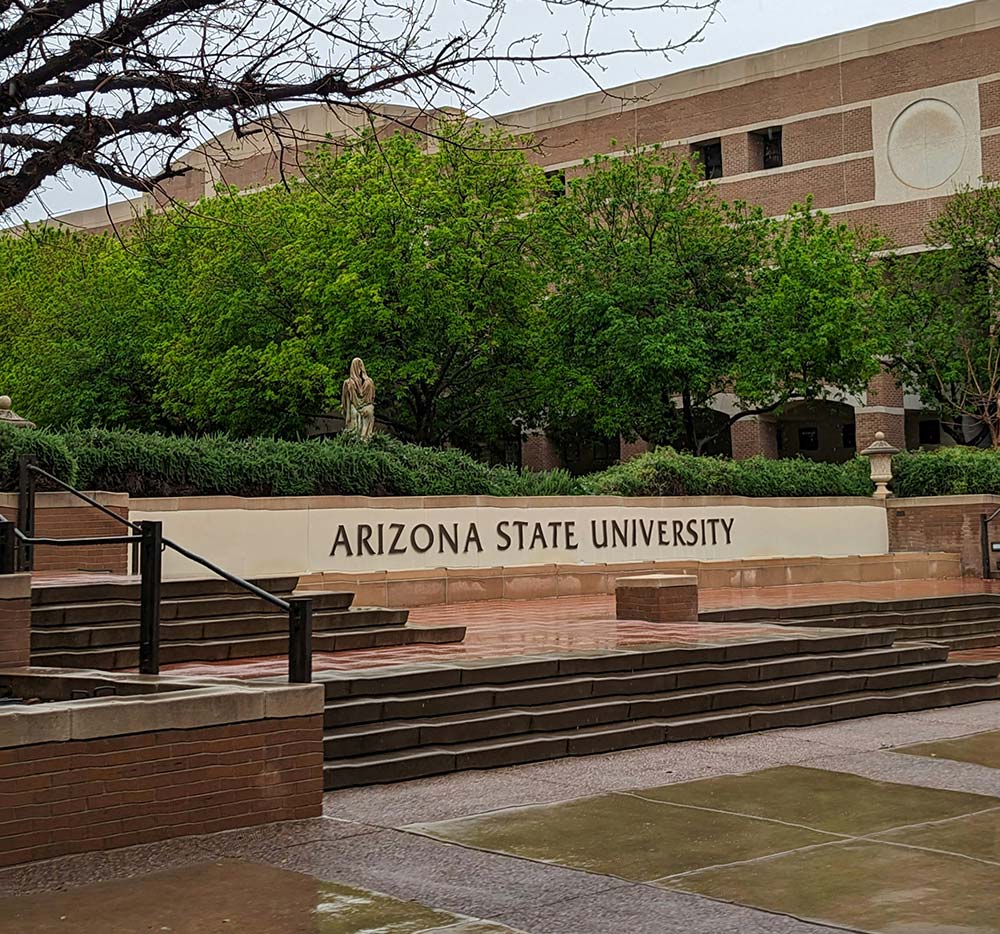

Arizona State University (ASU) has reached a significant milestone in its research trajectory, surpassing $1 billion in annual research expenditures for the first time, according to the 2024 National Science Foundation Higher Education Research and Development (HERD) survey. This places ASU among the top 4 percent of research institutions nationwide and underscores its rapid expansion as a high-impact research university.
ASU’s total research expenditures reached $1.003 billion, marking an eightfold increase since the university’s current president, Michael Crow, took leadership in 2002. The ranking — 37th overall among all U.S. universities and 21st among public universities — situates ASU ahead of several well-established research institutions, including Michigan State University and Purdue University.
“This milestone underscores our unwavering commitment to building a new model of a great American research university,” said Crow, highlighting ASU’s focus on translating scientific discovery into real-world benefit across public health, community resilience, and technology development.
The HERD survey, a comprehensive annual assessment of research spending across U.S. universities, reflects ASU’s success in attracting diverse funding from federal agencies (including NASA and the National Science Foundation), state and local governments, industry partners, and philanthropic contributions.
ASU’s research portfolio spans an extensive range of disciplines. The university achieved top-10 national rankings in fields such as anthropology, education, business, and visual and performing arts, alongside strong standings in engineering, social sciences, and physical sciences. These results reflect ASU’s strategy of investing in interdisciplinary inquiry rather than concentrating solely on traditional STEM areas.
In addition to academic breadth, ASU’s research has generated innovations with tangible societal impact. Teams at the university have developed AI tools to improve healthcare delivery and diagnostics, including algorithms for more accurate chest X-ray interpretation and models that enhance personalized cancer treatment regimens. Other projects focus on improving dementia care, environmental conservation, open-source community mapping, and advanced communications technology for national defense.
ASU’s ascent in research prominence is also reflected in broader institutional recognition: it has been ranked No. 1 in innovation by U.S. News & World Report for 11 consecutive years. It has maintained leadership in global impact toward the United Nations Sustainable Development Goals. In 2023, ASU was invited to join the Association of American Universities, a selective consortium of leading research universities.
Looking ahead, ASU aims to sustain this momentum by advancing research in emerging national priorities, including the ethical application of artificial intelligence, nutrition as medicine, critical minerals for future industries, and quantum science. The university’s growing research enterprise continues to involve students directly, providing hands-on opportunities that prepare the next generation of innovators.
ASU’s milestone signals not only the university’s expanding research capacity but also its deepening impact on scientific discovery, economic development and community well-being.