


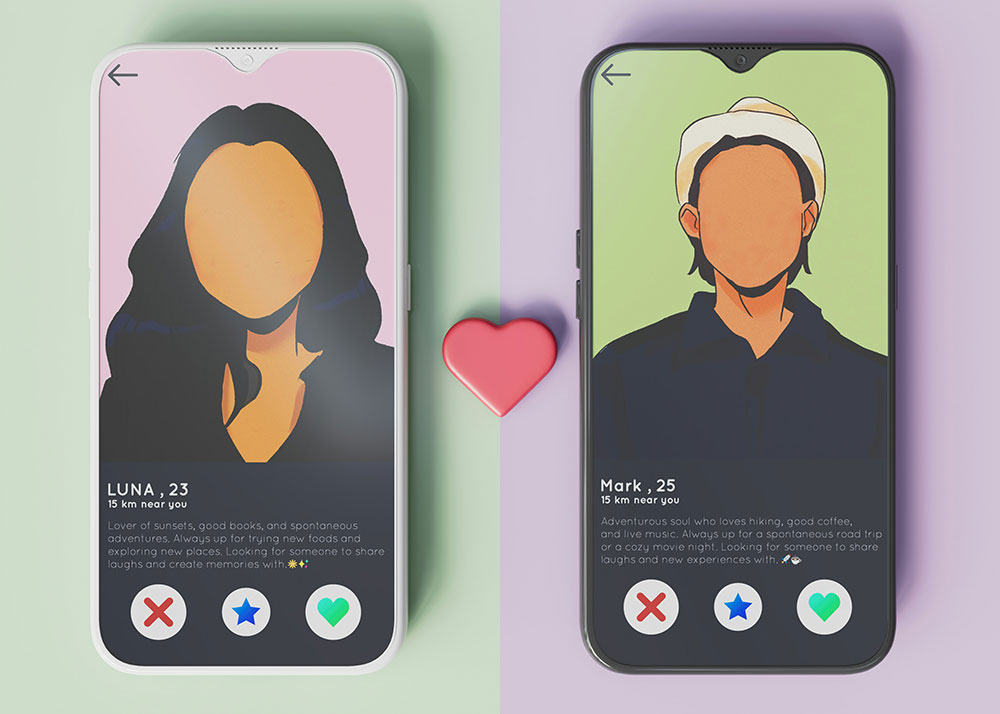

A couple meets on an app, exchanges messages for two weeks, then agrees to dinner. Three years later, they marry. The question everyone asks is simple: will it work?
The answer depends on who you ask and which study you read. Research on this topic spans over a decade, and the findings do not agree with each other. Some data suggests online couples stay together longer. Other data says they split faster. Both sets of researchers stand by their conclusions.
The Knot surveyed nearly 17,000 U.S. couples who married in 2024 or planned weddings for 2025. About 27% said they first met on a dating site or app. A 2024 study from the Proceedings of the National Academy of Sciences marks the first time a majority of spouses began their relationship online. These numbers tell us something has changed in how people find partners. They do not tell us if those partnerships hold.
What the Numbers Say
A study referenced from PNAS found that 5.96% of marriages that started online ended in separation or divorce by the time of the survey. For couples who met offline, that figure was 7.67%. Participants who met online also reported higher average marital satisfaction.
The University of Chicago produced similar findings. Marriages for people who met online reported a mean score of 5.64 on a satisfaction survey, compared with 5.48 for people who met offline. The gap is small, but it exists.
Then there is the other side. A study titled “Relative Strangers: The Importance of Social Capital for Marriage,” commissioned by the Marriage Foundation, found that 12% of couples who meet online get divorced within the first 3 years of marriage. For couples who meet through friends or family, that number drops to 2%. After 7 years, the figures rose to 17% and 10% respectively.
Harry Benson, the Marriage Foundation’s research director, stated that couples who meet online might lack sufficient social capital or close support networks to deal with challenges they face.
Choosing What You’re Looking For
People approach online dating with different intentions. Some want casual connections, while others seek long-term commitment. A portion of users might be looking for a sugar daddy, while others want someone their own age with similar career goals. The platform serves as a starting point, but the type of relationship a person pursues depends on their own priorities.
What matters more than where two people meet is what they want from each other. Pew Research Center found that 44% of dating app users cite finding a long-term partner as a major reason for using these services. Intentions vary, and outcomes follow accordingly.
The Problem With Too Many Options
A cross-national study published in Telematics and Informatics examined couples from 50 countries. Those who met offline tended to report slightly higher levels of relationship satisfaction and intensity of love, including intimacy, passion, and commitment.
Adam Bode, a PhD student at the Australian National University and co-author of the study, noted that participants who met partners online reported lower scores across these measures compared to those who met offline.
Researchers point to a few explanations. Couples who meet in person are more likely to share similar backgrounds, a concept called homogamy. Meeting offline often involves overlapping social networks, which increases the chances of shared values. Online platforms expose users to a vast pool of potential partners. This can lead to choice overload and reduce commitment confidence.
What Actually Predicts Success
Dr. Liesel Sharabi directs the Relationships and Technology Lab at Arizona State University. Her research focuses on how communication technologies affect mate selection and relationship formation.
ASU News cited her findings: “If you met your partner online, you were a little happier and a little less likely to break up or dissolve the marriage.”
Sharabi interviewed people who were married or in long-term relationships with someone they met on an app. She found that online dating provided a strong foundation because it encourages communication before the first face-to-face meeting. Some relationships formed online took more time to develop. Emotional intimacy preceded physical intimacy, which created a better foundation for the future.
She noted that waiting a couple of weeks is the sweet spot. It gives people time to know each other before meeting.
When Sharabi asked long-term couples how they determined compatibility, the answer was never about career, income, or education level. They talked about personality traits like kindness and loyalty. Those qualities are not picked up by an algorithm.
The Early Years Matter Most
After overcoming the first few rocky years, the way couples initially met does not make much of a difference. At the workplace, online, at a bar, or through family, all have divorce rates hovering around 20%.
The Marriage Foundation study states: “The fact that the added risk disappears after the first three years of marriage points to the importance of social capital established over the long term through families, friendships, and communities.”
A 2024 study published in CyberPsychology found that meeting one’s partner online versus offline was marginally related to experiencing less relationship success among people in a marital relationship. The difference was not observed among people in nonmarital romantic relationships.
Public Perception
A 2024 SSRS poll asked Americans what they believed about couples who meet online. Roughly 62% said relationships that start online are as successful as those that begin in person.
Pew Research Center reports that about 42% of U.S. adults say online dating has made the search for a long-term partner easier. Far fewer, at 22%, say it has made it harder.
One-in-five partnered adults under 30 say they met their current spouse or partner on a dating site or app. Among partnered LGB adults, that figure is 24%.
The Tool Is Neutral
Apps connect people. They do not determine outcomes.
Relationship success depends on behavior, communication, timing, and compatibility. Studies show little difference in satisfaction between online-origin and offline-origin couples. Both groups report similar levels of trust, communication, and long-term commitment. Longitudinal surveys find comparable divorce rates between spouses who met online and those who met in person.
The mode of meeting matters less than what happens after. People who communicate openly, share values, and put in effort tend to stay together. The platform that introduced them is incidental.