


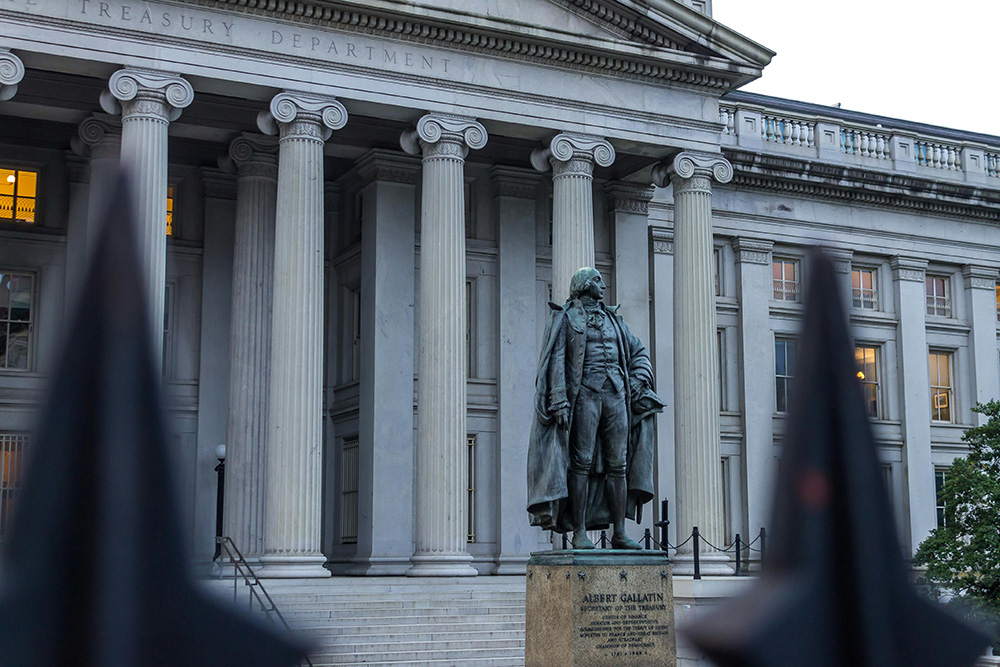

The Treasury Department on Oct. 8 sanctioned 17 tankers and their owners as part of Operation Economic Outcast, an action it said covers most of what remains of Iran’s shadow fleet.
The Office of Foreign Assets Control said the aging ships have moved millions of barrels of Iranian crude, fuel oil, naphtha, liquefied petroleum gas, methanol, bitumen and related products to markets in South and East Asia. Designations were made under Executive Order 13902, which covers Iran’s petroleum and petrochemical sectors. Owners named in the release are registered in the Marshall Islands, Hong Kong, China, the British Virgin Islands and the United Kingdom.
Cargo figures in the notice include more than 3.5 million barrels of crude on the Cameroon-flagged SHENZHEN since November 2025, more than 3 million barrels of naphtha on the Panama-flagged STARWAY since 2025, and more than 3 million barrels of high-sulfur fuel oil on the Palau-flagged KANHA since 2021. Other ships on the list flew flags of Comoros, Mongolia, Zanzibar, Sierra Leone, Vanuatu, San Marino and Gambia.
“Treasury is starving the tyrannical regime in Tehran of the money it uses to wage war in the region, and we will continue exposing those who enable the regime’s oil sales,” said Secretary of the Treasury Scott Bessent. “No enabler of Iranian sanctions evasion is safe from the full force of Treasury’s authorities.”
OFAC also took two ships off the sanctions list. HAKUNA MATATA and PINOCCHIO were identified in June 2025 as part of the shadow fleet. Treasury said they have since been sold to non-sanctioned operators and can return to ordinary trade.
A designation blocks U.S. persons from dealing with the named vessels and companies. It does not, by itself, seize a ship at sea. Treasury’s claim that the action neutralizes most of the remaining network depends on whether those tankers can still find flags, insurers and buyers outside the U.S. system.



